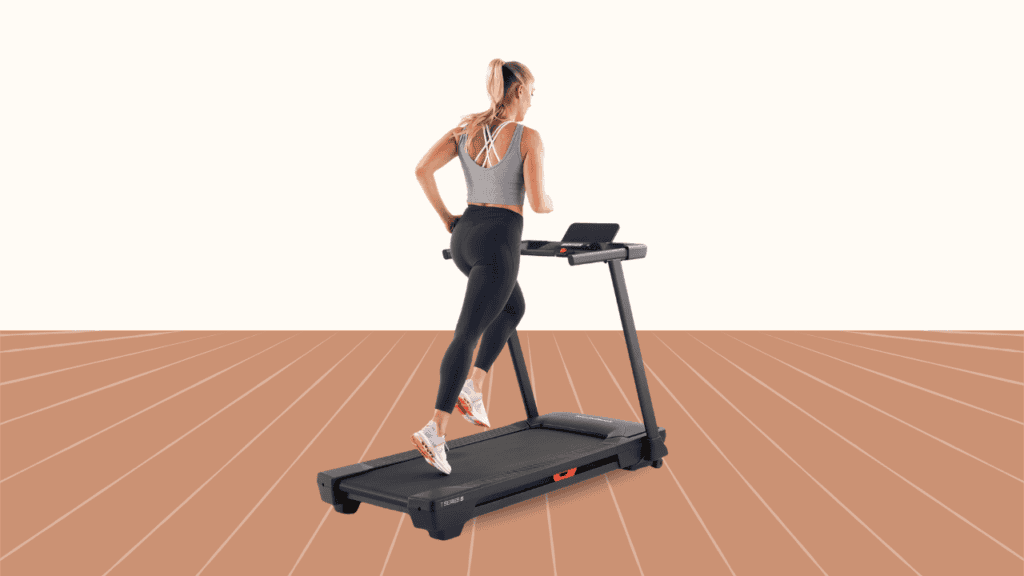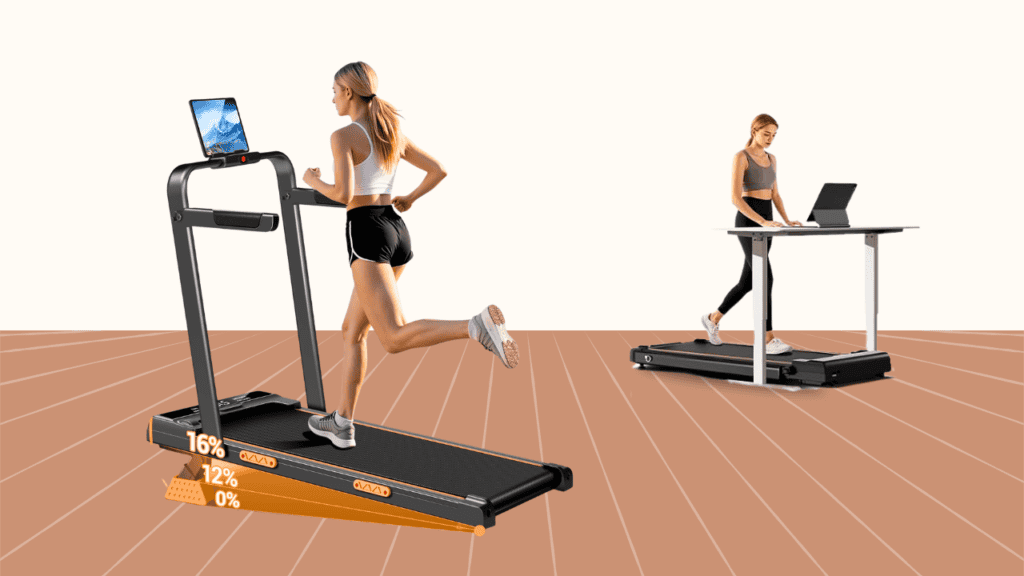
Most walking pads under $150 are flat — no incline, no handles, nothing to actually challenge you. The CURSOR X5F claims a 16% incline, side handrails, and a 330-pound weight capacity, all for $129. That combination usually shows up on machines priced closer to $200.
So either something’s wrong with this one, or something’s wrong with everyone else’s pricing. Let’s break down the specs and find out which.
CURSOR X5F Review: Quick Verdict
If you want a genuinely challenging incline walking pad with stability handles and a small footprint, the CURSOR X5F is one of the strongest value picks in its price bracket — with one meaningful trade-off worth understanding before you buy. Keep reading for the full breakdown, including who this isn’t a good fit for, or [check today’s price on Amazon] if you already know the trade-off works for you.
Watch CURSOR X5F Review
Who This Walking Pad Is Actually For
As a trainer, the first thing I look at with any budget cardio equipment isn’t the flashiest spec — it’s whether the machine matches what the person actually needs it for.
Top speed on the CURSOR X5F is 6.3 mph, which puts it firmly in walking and light jogging territory, not race training. If you’re training for a 5K or want serious running capability, this isn’t the machine.
But if your goal is a compact, incline-capable walking pad for a living room, apartment, or home office — with handles for balance and support — this is worth a closer look, especially for:
- Beginners easing into a walking routine
- Seniors or anyone prioritizing stability
- People recovering from injury who need support while moving
- Home office workers wanting incline walks without a bulky treadmill
A pattern I see often in my coaching practice: someone buys a full-size treadmill, finds it intimidating or space-consuming, and it becomes a clothes rack within a month. A compact incline walker with a genuinely low starting speed is a lower-friction entry point — you’re more likely to actually use a machine that doesn’t feel like a commitment every time you look at it.
The Catch That Isn’t a Catch: Manual vs. Motorized Incline
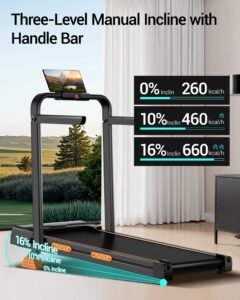
Here’s the answer to the pricing question above: the incline is manual, not motorized.
You set the grade by hand before your walk — there’s no remote-controlled incline adjustment mid-session as you’d find on higher-end machines. On paper, that sounds like a missing feature. In practice, it’s the reason this machine can offer a 16% incline range at all at this price.
Motorized incline systems require additional motors, electronics, and structural reinforcement — all of which add real manufacturing cost. Cutting that one feature is likely how the CURSOR X5F reaches a 16% incline range while keeping everything else — capacity, motor size, handrails — intact.
From a training standpoint, this trade-off matters less than it sounds. Most home walking-incline routines involve setting a grade and holding it for the session, rather than constantly adjusting incline on the fly — which is exactly what a manual system supports well.
If your programming looks like “10 minutes flat, 20 minutes at a steady incline, 5-minute cooldown,” you set the lever twice and never touch it again. Where a manual system would genuinely frustrate you is interval-style incline work — 1 minute steep, 1 minute flat, repeated — since you’d be stopping to adjust the lever every 60 seconds. If that’s your training style, this isn’t the machine, and no amount of value pricing changes that.
Key Specs That Matter
Capacity and Deck Size
The CURSOR X5F is rated for 330 pounds on a deck measuring 35.8″ x 15.2″. Most compact walking pads in this price range cap out around 265–300 pounds, so this gives you meaningful headroom — both for user weight and for a natural walking stride.
Handrails and Starting Speed
Extra-long padded handrails run the full length of the deck, clearly designed with seniors, beginners, and injury recovery in mind. Paired with a low 0.6 mph starting speed, this is a machine that eases you in rather than starting you on a fast-moving belt — a detail that matters more than people expect when stability is a real concern.
I’d add one coaching note here: a 0.6 mph floor is slower than most people expect a “walking” machine to go, and that’s a feature, not a limitation. When I work with clients returning from injury or starting from a low fitness base, the ability to move at a genuinely unhurried pace — while holding a handrail — is often the difference between someone sticking with a routine and someone abandoning it after a scary first session.
Motor and Belt
A 2.5 horsepower brushless motor powers speeds from 0.6 to 6.3 mph. The belt uses a 7-layer cushioned construction, designed to reduce joint impact — a common and worthwhile feature at this price tier for anyone concerned about knee or hip strain during walking workouts.
Display
A basic LED display tracks speed, time, distance, and calories. No Bluetooth, no app, no fitness tracker syncing. At this price, that’s a reasonable trade — the core walking experience isn’t compromised by the missing connectivity.
Folded Footprint
Folded down, the CURSOR X5F measures 46.9″ x 24.4″ x 4.4″ — thin enough to slide under a bed or lean against a wall. At 46.3 pounds, one person can move it, though it’s not effortless to relocate frequently.
| Motor | 2.5 HP brushless |
| Deck Size | 35.8″ x 15.2″ |
| Belt | 7-layer cushioned |
| Speed Range | 0.6–6.3 mph |
| Incline | 0–16% (manual) |
| Weight Capacity | 330 lbs |
| Unit Weight | 46.3 lbs |
| Folded Size | 46.9″ x 24.4″ x 4.4″ |
| Display | LED — speed, time, distance, calories |
| Connectivity | None — no app or Bluetooth |
| Warranty | 1 year |
Price Comparison: Is $129 Actually a Good Deal?
Here’s how the CURSOR X5F stacks up against the two tiers it sits between:
Entry-level flat walking pads ($90–$120): These typically offer 0% incline, or a fixed 3–5% grade with no adjustment at all. Weight capacity in this tier usually tops out around 220–265 lbs, and handrails are either absent or short, non-padded side rails rather than full-length support bars.
Mid-range incline walking pads ($150–$300): This is where you start seeing 12–16% incline ranges — but the mechanism is almost always motorized, adjustable via remote or app mid-session. Weight capacity is comparable to the X5F (300–330 lbs), and belt cushioning is similar.
The CURSOR X5F is priced at the bottom of the entry-level tier but delivers the incline range and weight capacity of the mid-range tier. The one spec it gives up to get there is the motorized adjustment — which, as covered above, only matters if your training style needs incline changes mid-session rather than incline held per session.
If you’re comparing options yourself, the fastest way to sanity-check this is: find any walking pad advertising 15%+ incline, and check whether the listing says “manual” or “motorized/remote.” That single word is usually where the $70–90 price gap goes.
What You’re Giving Up
To be straight with you, two real limitations are worth knowing before you buy:
1. Changing incline mid-walk isn’t seamless. Since the incline is manual, adjusting it means stopping, changing the lever position, and restarting — not a smooth transition like a motorized system offers.
2. The motor has real limits at the extremes. If you’re a heavier user regularly pushing toward the 6.3 mph top speed, you’re asking a lot of a 2.5 HP motor. It will do the job, but I wouldn’t expect the same long-term durability at the extreme end of its range that you’d get from a higher-horsepower machine. This is an inference from the spec sheet and typical motor-wear patterns in this HP class, not a durability finding from testing this specific unit — worth knowing given we haven’t run this one long-term ourselves.
Neither is a dealbreaker at $129 — they’re simply the trade-offs that make this price point possible.
Frequently Asked Questions
Is the incline on the CURSOR X5F manual or automatic?
Manual. You set the incline grade by hand before starting your walk; it does not adjust automatically or via remote mid-session.
What is the weight capacity of the CURSOR X5F?
330 pounds.
Can taller users comfortably use this walking pad?
The deck measures 35.8″ long by 15.2″ wide. Most users will have enough room for a natural walking stride, though very tall users (6’2″+) should keep strides controlled rather than attempting a full running stride.
Does the CURSOR X5F have Bluetooth or app connectivity?
No. It has a basic LED display tracking speed, time, distance, and calories, with no app or Bluetooth syncing.
Is this walking pad good for beginners or injury recovery?
Yes. The low 0.6 mph starting speed and full-length padded handrails make it a reasonable option for beginners, seniors, or those easing back into activity after an injury — though anyone recovering from a specific injury should confirm with a physical therapist or doctor before starting a new routine.
How much does the CURSOR X5F weigh, and can one person move it?
It weighs 46.3 pounds and folds to 46.9″ x 24.4″ x 4.4″, making it manageable for one person to move, though not effortless.
Final Verdict
If all you need is flat-ground walking, cheaper pads exist. If your training style depends on adjusting incline mid-session, you’ll want to spend more on a motorized system.
But if you want a genuine 16% incline held per session, stability handles, and a fold-flat design that fits an apartment or home office — at $129, the CURSOR X5F closes a gap that most competitors in this price range haven’t figured out how to close.