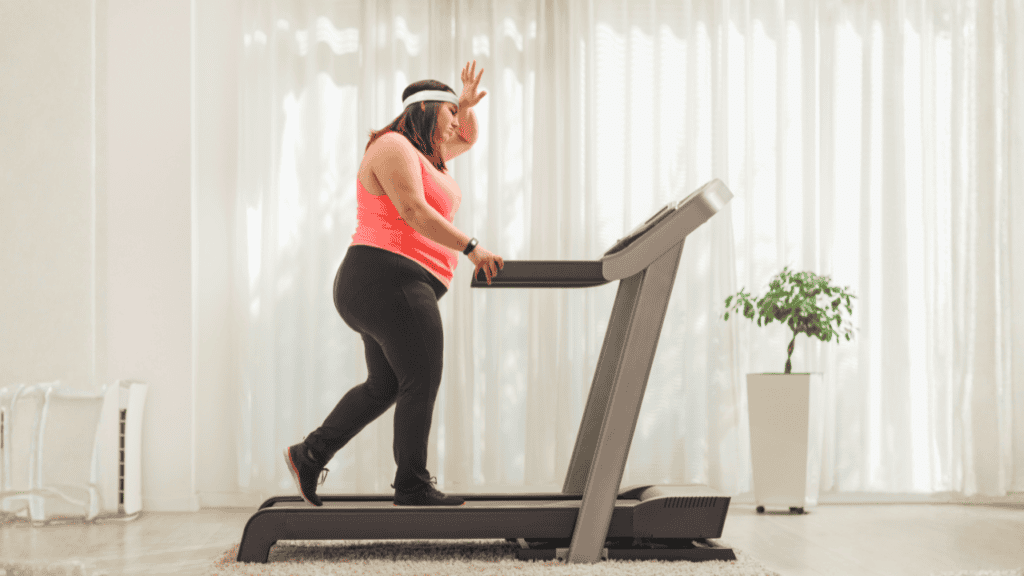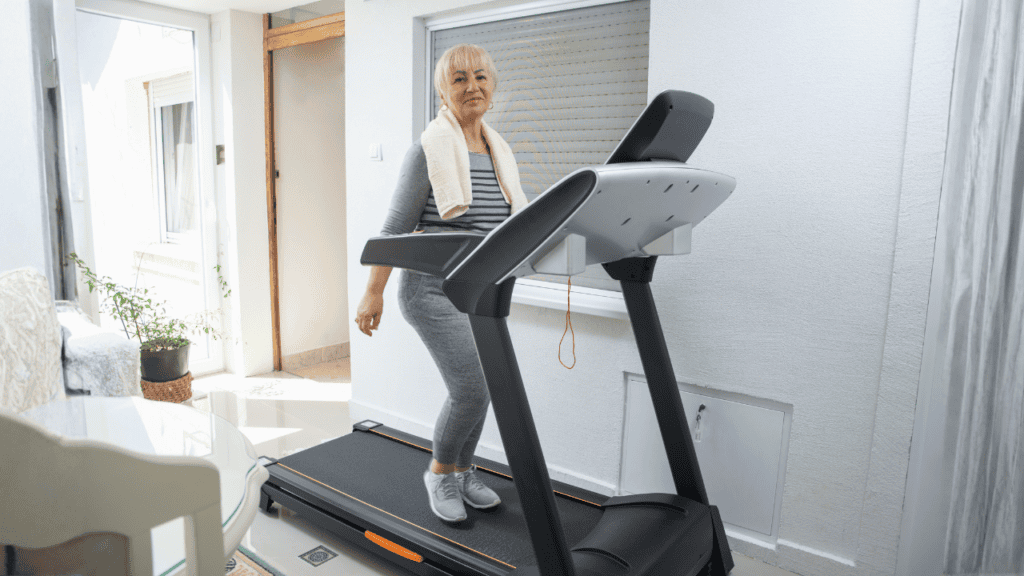
In five years of putting clients on treadmills — many of them managing balance issues, joint pain, or recovery from an injury or surgery — I’ve noticed something the typical “best treadmill” roundup gets backward. Those guides rank by top speed and horsepower. In my experience, those numbers matter far less than two things almost nobody writes about: how gently the belt starts, and how far you have to step up to get on it.
That’s not a hunch. The CPSC’s own data on older adults confirms falls are, by a wide margin, the leading cause of product-related injury and death in this age group — which is exactly why the moments of highest instability (the belt engaging, the step on and off) deserve more scrutiny than a spec sheet’s top speed ever gets. I’ve watched it happen with clients: someone braces for a walk, hits start, and the belt jumps to 1-2 mph before they’ve settled their weight. Or the fall risk isn’t the walk at all — it’s the transition getting on or off the deck.
This guide ranks five treadmills against the criteria that actually address that: starting speed, step-up height, handrail placement, and cushioning — not just what’s on the spec sheet.
The Best Treadmill for Seniors
- Best Overall: Redliro Treadmill
- Best for Small Spaces: WALKINGPAD G1SE
- Best for Easy On/Off: Sunny Treadpad
- Best Cushioning: ProForm Carbon TL
- Best Incline: Sunny Smart Treadmill
What to Look for in a Treadmill for Seniors
Before the picks, here’s the actual criteria I used — the same ones I walk clients through when they ask what to buy.
A gentle starting speed. This is the single most overlooked safety factor. Most treadmills jump to 1–2 mph the instant you hit start, which can throw off balance before you’ve even settled in. A treadmill that can start at 0.3–0.5 mph gives you time to find your footing.
A low step-up height. Most treadmill-related falls I’ve seen with clients don’t happen during the walk — they happen getting on or off. A deck that sits closer to the floor removes a meaningful chunk of that risk.
Real handrails. Not decorative side bars, but rails positioned where you’d actually reach for support if you felt unsteady. Dual handrails (side plus front) are ideal for anyone with balance concerns.
Joint-friendly cushioning. Walking is low-impact by nature, but repeated sessions on a hard, unforgiving deck still add up over months and years. Cushioning systems that absorb shock protect knees and hips over the long run.
Simple, readable controls. A treadmill with a maze of touchscreen menus is a treadmill that gets used less. Look for large buttons, high-contrast displays, and — ideally — quick-access speed controls on the handrails themselves.
A weight capacity with headroom. Don’t buy right up to the limit if you or the user is close to a treadmill’s max weight capacity; size up.
VIDEO: Best Treadmill for Seniors
Best Treadmills for Seniors: Quick Comparison
|
01 · Best Overall
Slow-Start Pick
Redliro Treadmill for Seniors
4.3/5
Check Price →
|
02 · Best for Small Spaces
Slides Under Bed
WALKINGPAD G1SE
4.1/5
Check Price →
|
03 · Best for Easy On/Off
4″ Step-Up (Official)
Sunny Treadpad (SF-T722062)
4.3/5
Check Price →
|
04 · Best Cushioning
ProShox™
ProForm Carbon TL
4.1/5
Check Price →
|
05 · Best Incline
15% Auto Incline
Sunny Smart Treadmill (SF-T723030)
4.2/5
Check Price →
|
|
|---|---|---|---|---|---|
| Starting Speed | 0.3–5.5 mph | 1.0–7.5 mph | 0.5–8.5 mph | 0–10 mph (manual — no motorized starting ramp) | 0.6–10 mph |
| Step-Up Height | Not published for this listing | Low-profile (exact height not published) | 4″ deck-to-floor height (manufacturer-confirmed) | 7.3″ at 0% incline (12.6″ at full 10% incline) | Not published (11.4″ is folded height, not step-up) |
| Weight Capacity | 300 lb | 240 lb | 245 lb | 300 lb | 300 lb |
| Incline | 0–2% (3-level manual) | None (flat only) | None (flat only) | 0–10% electric auto | 0–15% (15 auto levels) |
| Motor | ~2.5 HP (same product line; not listed on this exact ASIN) | 2.0 HP brushless | 2.5 Peak HP | 2.6 CHP | 2.5 HP brushless |
| Belt / Deck Size | 41.5″ x 16″ | 47.2″ x 17.3″ | 47.2″ x 18.9″ | 18″ x 55″ | 53.1″ x 20.1″ |
| Folds | Yes — foldable, auto-lubrication | Yes — half-folds, lowered handlebar, stores under bed/sofa (83.8 lbs) | Not listed as foldable — fixed, low-profile frame | Yes — SpaceSaver folding design | Yes — one-click, fully assembled |
| App / Bluetooth | Not advertised on this listing | App connectivity available, controlled via rotary dial | Yes — SunnyFit app, Bluetooth, 6 built-in programs | iFIT Bluetooth (BLE) enabled, 30-day iFIT trial included | Yes — SunnyFit app, 24 preset programs |
| Warranty | 1 year | 1 year | 3 yrs structural frame / 180 days other parts | 10 yrs frame / 1 yr parts & labor | 3 yrs structural frame / 180 days other parts |
| Ideal For | Most well-rounded, safety-first option | Apartments or shared spaces with no permanent spot for a treadmill | Anyone most concerned with the step on and off | Managing joint pain, wants the plushest ride | Building intensity through incline rather than speed |
1. Overall Best Treadmill for Seniors: Redliro Treadmill
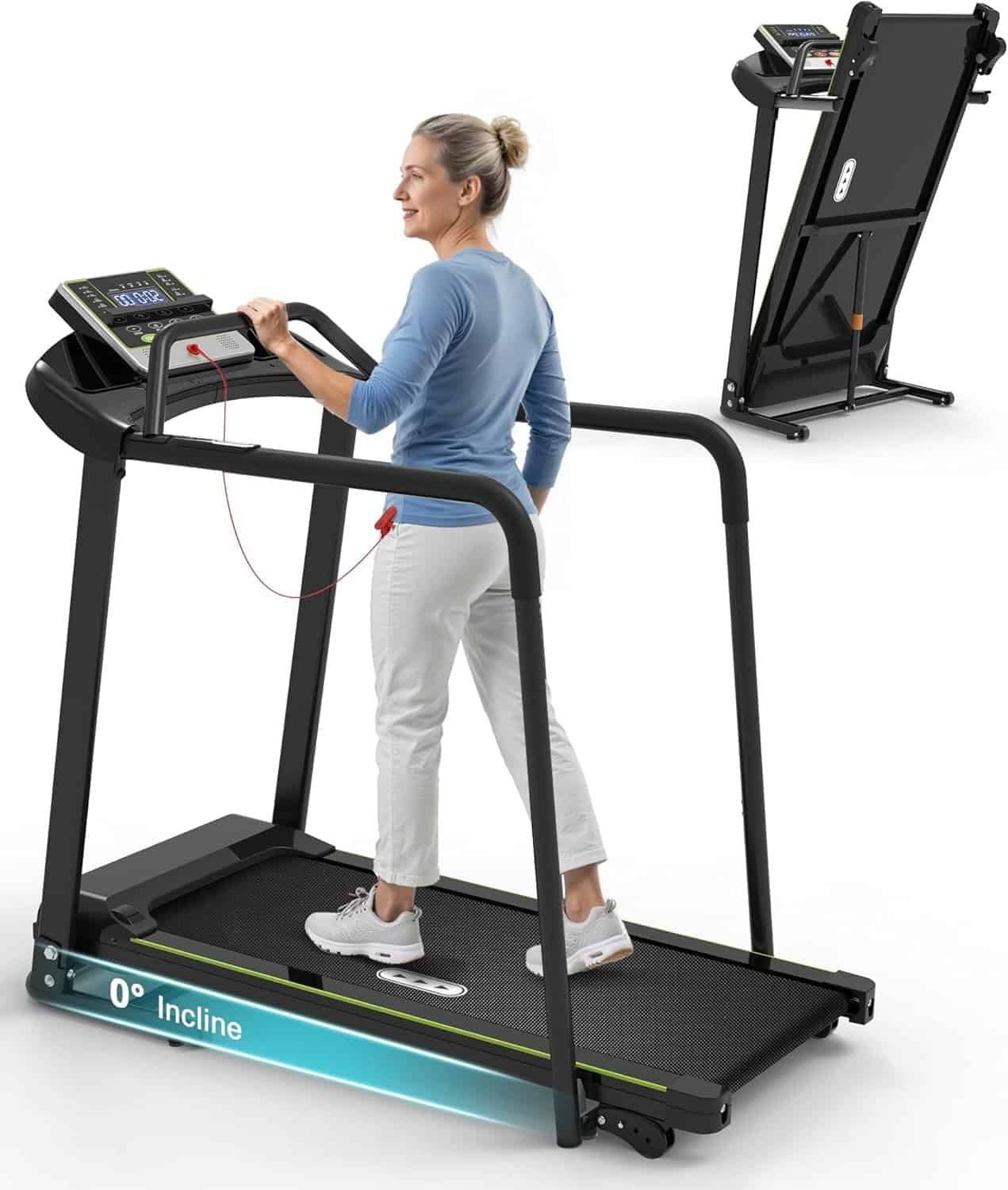
| Starting / Speed Range | 0.3–5.5 mph |
| Step-Up Height | Not published for this listing |
| Belt / Deck Size | 41.5″ x 16″ |
| Incline | 0–2% (3-level manual) |
| Weight Capacity | 300 lb |
| Motor | ~2.5 HP (same product line; not listed on this exact ASIN) |
| Warranty | 1 year |
| Subscription / App | Not advertised on this listing |
| Folds | Yes — foldable, auto-lubrication |
The Redliro earns the top spot for one reason above all others: a 0.3 mph starting speed, about as gentle a start as you’ll find on a home treadmill. That matters more than the number suggests — the belt engaging before a walker has settled their weight is one of the more common instability moments I see, and starting this slow essentially removes that window.
It backs that up with a dual handrail system — side rails plus an ergonomically shaped front bar — so there’s something to hold onto no matter how you naturally brace yourself. The 3-level manual incline lets you lock in a completely flat deck, which is exactly what you want if stability is the priority over intensity.
What I like: the slow start, the dual handrails, and the fact that it folds with a gas-spring assist — no wrestling the deck up or down.
What to know before buying: at 300 lbs weight capacity and a 41″ x 16″ deck, it’s on the more compact side. Taller users or those with a longer natural stride may find the belt a little tight. There’s also no app or Bluetooth connectivity, which some buyers will see as a plus (fewer things to fuss with) and others as a missing feature.
Baseline reflects senior-safety guidance, not general treadmills: 1.0 mph min. starting speed, ~7″ step-up height, 300 lb capacity, 1–2 yr limited warranty. Lower is better for speed and step-up.
| Spec | Redliro Treadmill for Seniors | Average Senior Treadmill |
|---|---|---|
| Starting Speed | 0.3 mph | 1.0 mph |
| Step-Up Height | Not published | ~7″ |
| Weight Capacity | 300 lb | 300 lb |
| Warranty | 1 year | 1–2 yr limited |
Anyone who wants the most well-rounded, safety-first option without compromise.
Check Price on Amazon →2. Best for Small Spaces: WALKINGPAD G1SE
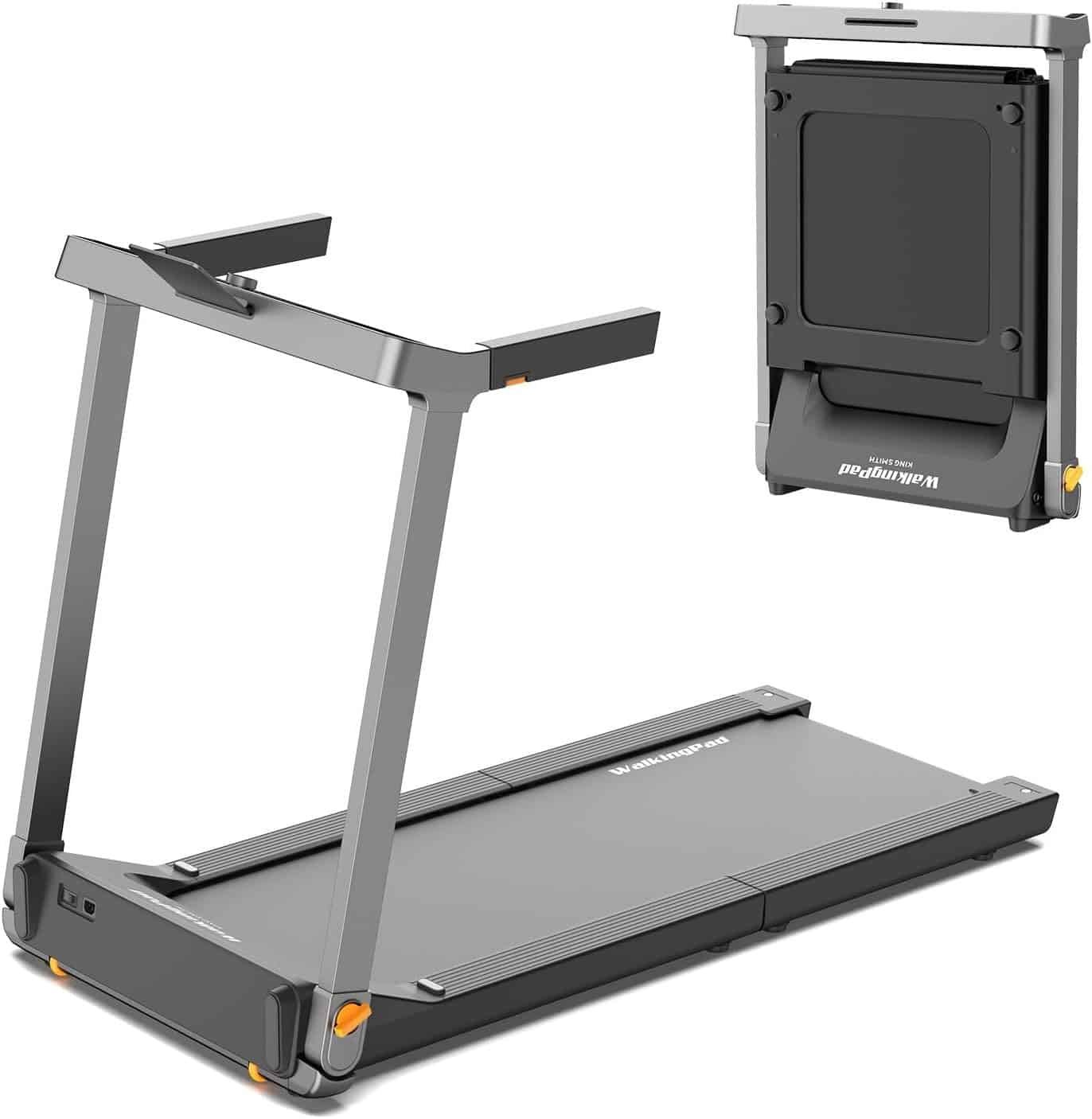
| Starting / Speed Range | 1.0–7.5 mph |
| Step-Up Height | Low-profile (exact height not published) |
| Belt / Deck Size | 47.2″ x 17.3″ |
| Incline | None (flat only) |
| Weight Capacity | 240 lb |
| Motor | 2.0 HP brushless |
| Warranty | 1 year |
| Subscription / App | App connectivity available, controlled via rotary dial |
| Folds | Yes — half-folds, lowered handlebar, stores under bed/sofa (83.8 lbs) |
Space is often the real barrier to daily movement — not motivation, not fitness level, just “where does this thing go when I’m not using it.” The WALKINGPAD G1SE solves that specifically: it half-folds and slides under a bed or sofa, so it disappears when you’re done.
Don’t mistake compact for underpowered, though. It reaches speeds up to 7.5 mph, well past a casual walking pace, so it has room to grow with someone as fitness improves. The walking surface — 47.2″ x 17.3″ — is actually roomier than most compact folders, which matters more than people expect; a cramped belt makes for a tentative, unsteady stride. The trade-off is on the low end: its 1.0 mph starting speed is faster than the others on this list — worth knowing if a gentler ramp-up matters more to you than the storage win.
What I like: the storage solution is genuinely clever, and the control scheme (a single rotary dial instead of a touchscreen maze) is about as simple as it gets.
What to know before buying: at 240 lbs, it has the lowest weight capacity on this list. It’s also flat with no incline option, so it’s a pure walking/light-jogging tool rather than one built for progressive intensity.
Baseline reflects senior-safety guidance, not general treadmills: 1.0 mph min. starting speed, ~7″ step-up height, 300 lb capacity, 1–2 yr limited warranty. Lower is better for speed and step-up.
| Spec | WALKINGPAD G1SE | Average Senior Treadmill |
|---|---|---|
| Starting Speed | 1.0 mph | 1.0 mph |
| Step-Up Height | Low-profile (not published) | ~7″ |
| Weight Capacity | 240 lb | 300 lb |
| Warranty | 1 year | 1–2 yr limited |
Apartments, shared living spaces, or anyone who can’t dedicate a permanent spot to a treadmill.
Check Price on Amazon →3. Best for Easy On/Off: Sunny Health & Fitness Treadpad
| Starting / Speed Range | 0.5–8.5 mph |
| Step-Up Height | 4″ deck-to-floor height (manufacturer-confirmed) |
| Belt / Deck Size | 47.2″ x 18.9″ |
| Incline | None (flat only) |
| Weight Capacity | 245 lb |
| Motor | 2.5 Peak HP |
| Warranty | 3 yrs structural frame / 180 days other parts |
| Subscription / App | Yes — SunnyFit app, Bluetooth, 6 built-in programs |
| Folds | Not listed as foldable — fixed, low-profile frame |
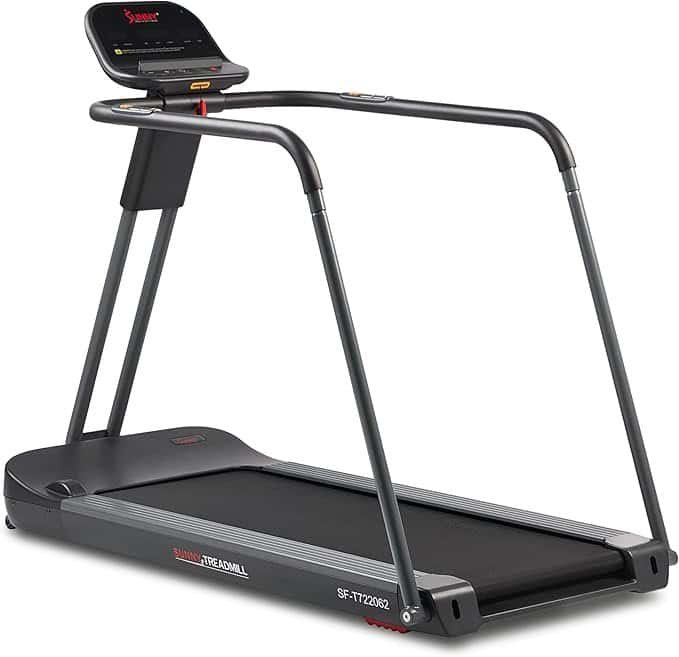
This is the pick I’d point a fall-risk-conscious client toward first, and it’s built specifically around the step-on/step-off problem: a 4-inch step-up height, one of the lowest of any home treadmill on the market, paired with a magnetic safety clip and a comfortably wide 18.9″ belt with built-in shock absorption.
It’s also a stationary unit by design, not a folding one. That’s a genuine trade-off, not a downside dressed up as a feature: you give up the storage flexibility of a foldable deck in exchange for a treadmill that’s simply ready to walk on the moment you approach it, with nothing to unlock, lift, or lower first.
What to know before buying: it’s the priciest option here (around $800), and being non-foldable means it needs a permanent footprint in your home. Assembly also takes longer — plan for 1–2 hours, or budget for professional assembly if that’s not something you want to tackle.
Baseline reflects senior-safety guidance, not general treadmills: 1.0 mph min. starting speed, ~7″ step-up height, 300 lb capacity, 1–2 yr limited warranty. Lower is better for speed and step-up.
| Spec | Sunny Treadpad (SF-T722062) | Average Senior Treadmill |
|---|---|---|
| Starting Speed | 0.5 mph | 1.0 mph |
| Step-Up Height | 4″ | ~7″ |
| Weight Capacity | 245 lb | 300 lb |
| Warranty | 3 yrs frame | 1–2 yr limited |
if step-up height is the one spec you’re not willing to compromise on, this is the one to start with.
Check Price on Amazon →4. Best Cushioning: ProForm Carbon TL
| Starting / Speed Range | 0–10 mph (manual — no motorized starting ramp) |
| Step-Up Height | 7.3″ at 0% incline (12.6″ at full 10% incline) |
| Belt / Deck Size | 18″ x 55″ |
| Incline | 0–10% electric auto |
| Weight Capacity | 300 lb |
| Motor | 2.6 CHP |
| Warranty | 10 yrs frame / 1 yr parts & labor |
| Subscription / App | iFIT Bluetooth (BLE) enabled, 30-day iFIT trial included |
| Folds | Yes — SpaceSaver folding design |
The smart features require an active iFIT membership to unlock fully — factor that ongoing cost in if the guided workouts are a big part of the appeal. The handlebar also sits fairly high off the deck (about 35.5″), which is worth checking against the intended user’s height and reach before you buy.
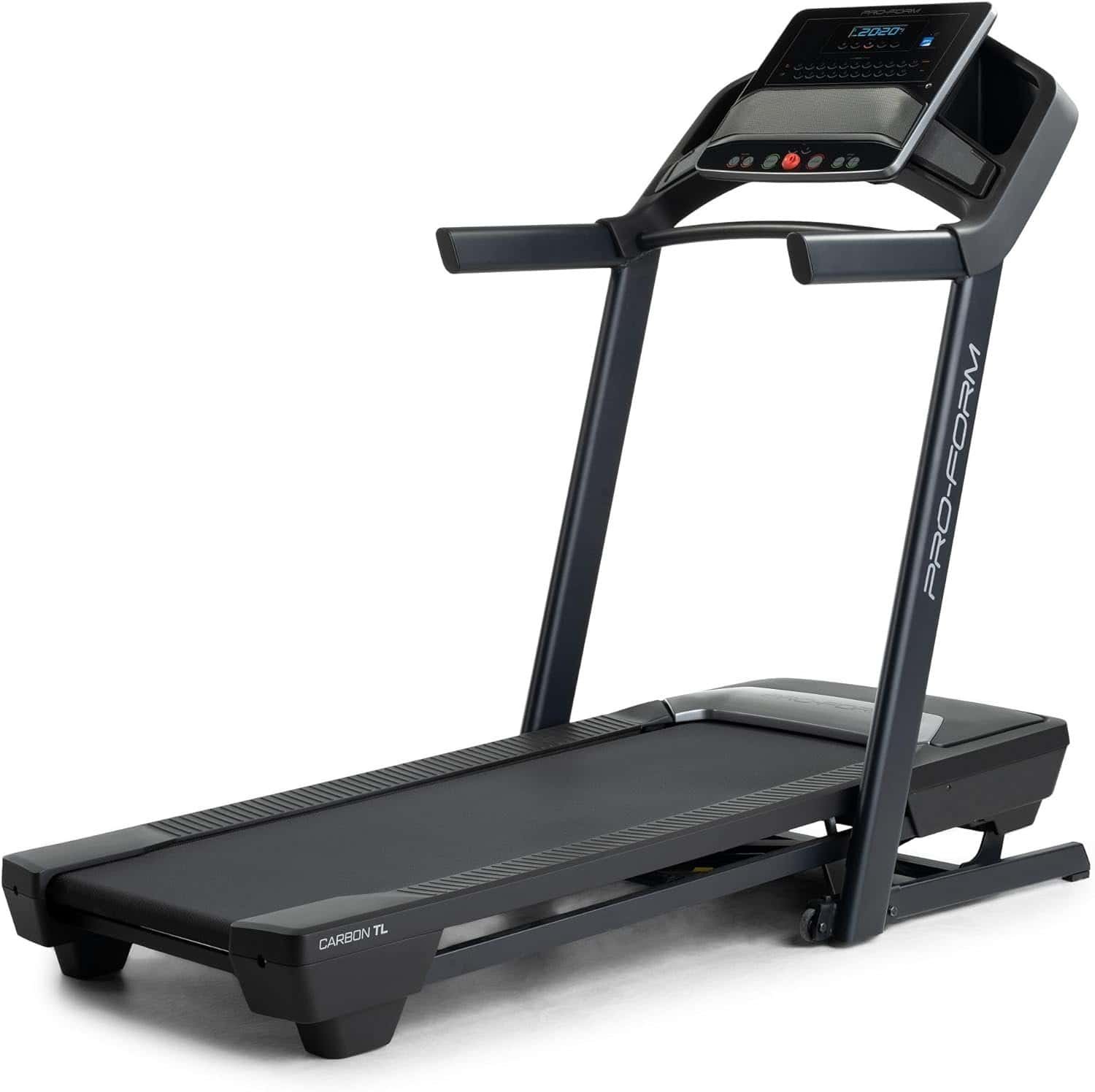
Where it earns its place on this list: ProForm’s ProShox™ cushioning is specifically engineered to absorb impact rather than transfer it into your knees and hips — the kind of difference that shows up not during the walk, but the next morning. It’s also the most feature-rich option here, with speeds up to 10 mph, incline up to 10%, and optional iFIT integration that can auto-adjust pace and incline to match a trainer-led session.
With clients who do better with structure and a bit of external motivation rather than walking solo, this kind of guided programming genuinely helps adherence — I’ve seen it make the difference between someone using their treadmill three times a week versus leaving it as an expensive coat rack.
What I like: the cushioning, the 10-year frame warranty (the strongest on this list by a wide margin), and the incline range for anyone who wants to progress over time.
Baseline reflects senior-safety guidance, not general treadmills: 1.0 mph min. starting speed, ~7″ step-up height, 300 lb capacity, 1–2 yr limited warranty. Lower is better for speed and step-up.
| Spec | ProForm Carbon TL | Average Senior Treadmill |
|---|---|---|
| Starting Speed | Manual (not comparable) | 1.0 mph |
| Step-Up Height | 7.3″ | ~7″ |
| Weight Capacity | 300 lb | 300 lb |
| Warranty | 10 yrs frame | 1–2 yr limited |
Anyone managing joint pain who wants the plushest ride available, and doesn’t mind some extra tech in exchange.
Check Price on Amazon →5. Best Incline: Sunny Health & Fitness Smart Treadmill
| Starting / Speed Range | 0.6–10 mph |
| Step-Up Height | Not published (11.4″ is folded height, not step-up) |
| Belt / Deck Size | 53.1″ x 20.1″ |
| Incline | 0–15% (15 auto levels) |
| Weight Capacity | 300 lb |
| Motor | 2.5 HP brushless |
| Warranty | 3 yrs structural frame / 180 days other parts |
| Subscription / App | Yes — SunnyFit app, 24 preset programs |
| Folds | Yes — one-click, fully assembled |
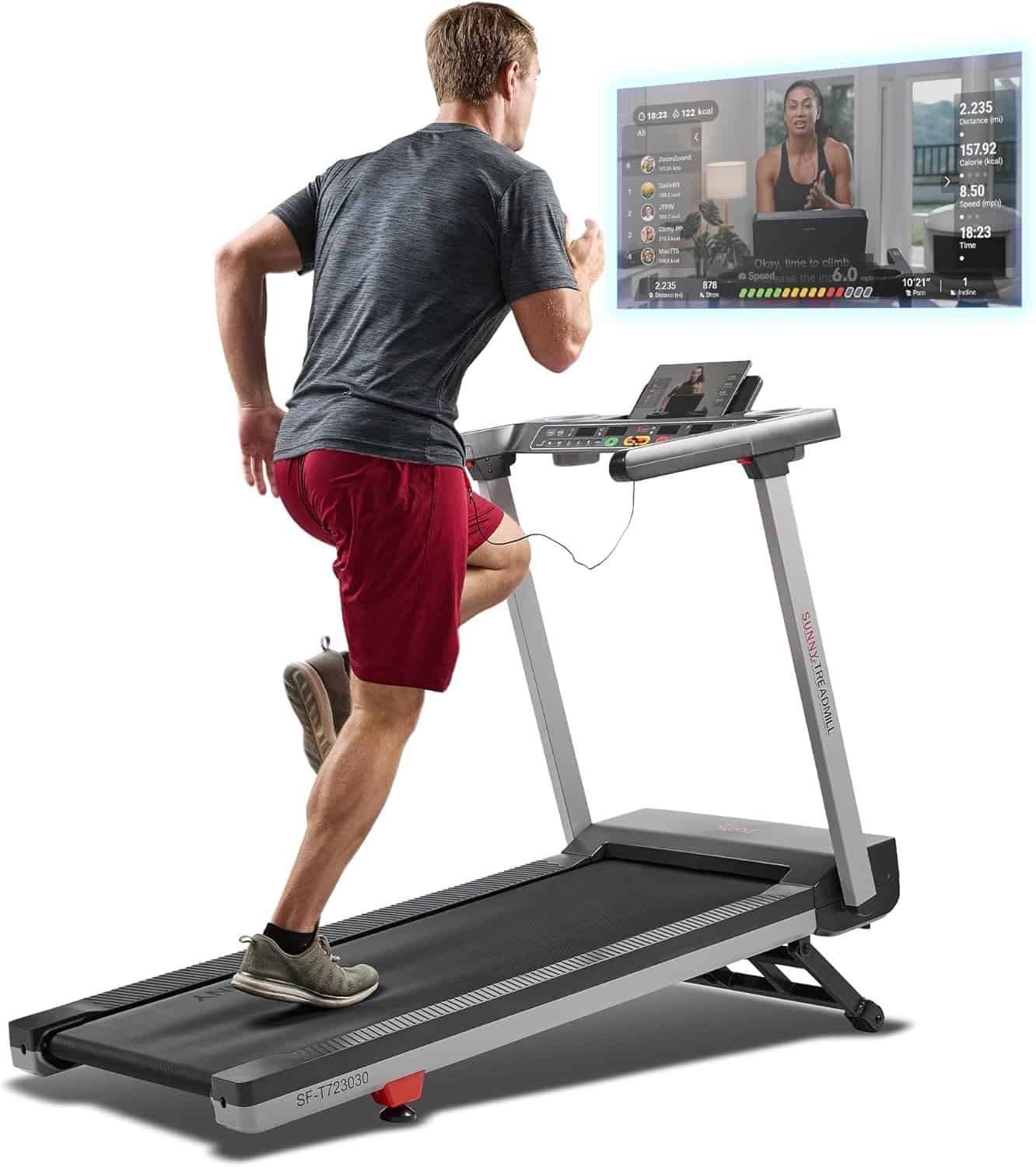
This is the pick for progression. 15 auto incline levels up to 15% is a serious range for a home unit, and incline walking specifically is a method I recommend often — it raises intensity and calorie burn without the joint strain that comes from simply walking faster. For a client who’s cleared for more challenge but shouldn’t be pushing speed, incline is usually the safer lever to pull. The deck is generous at 53.1″ x 20.1″, it folds in one click with no tools required, and it comes with 24 preset programs plus a double-deck shock absorption system.
What I like: the incline range is genuinely rare at this price point, and the one-click fold means it doesn’t demand the same commitment as bulkier folding treadmills.
What to know before buying: at 130 lbs, it’s a heavy unit to move around even though it folds — factor that into who’ll actually be relocating it day to day. Professional assembly is available for an extra fee if that’s a concern.
Baseline reflects senior-safety guidance, not general treadmills: 1.0 mph min. starting speed, ~7″ step-up height, 300 lb capacity, 1–2 yr limited warranty. Lower is better for speed and step-up.
| Spec | Sunny Smart Treadmill (SF-T723030) | Average Senior Treadmill |
|---|---|---|
| Starting Speed | 0.6 mph | 1.0 mph |
| Step-Up Height | Not published (11.4″ folded ht.) | ~7″ |
| Weight Capacity | 300 lb | 300 lb |
| Warranty | 3 yrs frame | 1–2 yr limited |
Anyone who wants room to build up intensity over time through incline rather than speed, while still folding the unit away.
Check Price on Amazon →Which One Should You Actually Buy?
- Want the safest, most balanced option with no real weaknesses? Go with the Redliro.
- Working with limited space? The WALKINGPAD G1SE disappears when you’re done with it.
- Most worried about the step on and off? The Sunny Treadpad Low Profile was built around exactly that risk.
- Managing joint pain? The ProForm Carbon TL‘s cushioning is the standout here.
- Want to build up intensity through incline over time? The Sunny Smart Treadmill gives you the most room to grow.
There’s no single “best” treadmill for every senior — the right pick depends on what matters most: safety margin, space, joint comfort, or long-term progression. Hopefully this breakdown makes that decision easier, whether you’re shopping for yourself or a parent.
Frequently Asked Questions
Is walking on a treadmill good for seniors?
Yes — walking is one of the safest, lowest-impact forms of cardiovascular exercise available, and a treadmill lets you control pace, incline, and environment (no uneven sidewalks, weather, or traffic to navigate). For older adults, consistency matters more than intensity, and a home treadmill removes a lot of the friction that gets in the way of a daily walking habit.
What starting speed is safe for a senior on a treadmill?
Look for a treadmill that can start at 0.3–0.6 mph. Many standard treadmills jump straight to 1–2 mph, which can be jarring or destabilizing for someone with balance concerns. A slow, gradual start is one of the most important — and most overlooked — safety features to check for.
What incline is safe for seniors on a treadmill?
Most seniors do well starting flat (0% incline) and only introducing incline gradually, typically in the 1–5% range, once they’re comfortable with the pace and balance. Incline walking is a great way to increase intensity without increasing speed, but it should be added progressively, not from day one.
Do seniors need a treadmill with handrails?
For most older adults, yes — especially anyone with balance concerns, a history of falls, or a condition affecting stability. Look for handrails positioned where you’d naturally reach for support, not just decorative side bars. Dual handrails (side plus front) offer the most support.
How low should a treadmill’s step-up height be for elderly users?
The lower, the better — anything under 5 inches is considered excellent. Since a significant share of the treadmill-related injuries I see happen while stepping on or off rather than during the walk itself, step-up height deserves as much attention as any other spec on this list.