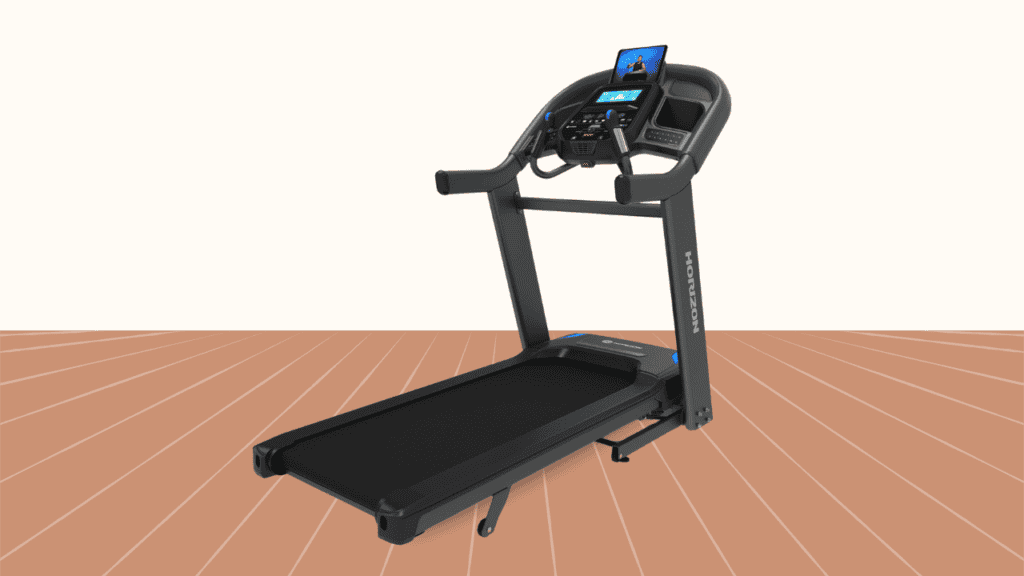
If you’ve outgrown an entry-level treadmill, or you’re training seriously enough that a weaker motor and a cramped deck are starting to hold you back, the Horizon 7.4 AT is one of the stronger options in the $1,800 range. It’s built specifically around fast, responsive interval training, and it competes directly with the NordicTrack Commercial 1750 — a machine that costs about $200 more and, on paper, out-specs it in a couple of real ways.
As a NASM-certified trainer, I don’t think either machine is a clear “winner” here — and I’d be skeptical of any review that claims one is. This is a genuine trade-off between raw hardware and long-term cost, and which one is right depends entirely on how you plan to train. Here’s the full breakdown.
Quick Take: The Horizon 7.4 AT is a genuinely strong $1,800 treadmill for anyone doing real interval work or logging serious mileage — a fast-responding motor, a spacious deck, and Horizon’s best warranty tier, with zero subscription cost. Its main trade-offs are a smaller screen and a motor a step behind its closest competitor, the NordicTrack Commercial 1750. If you want the full comparison, keep reading — if you just want the verdict, the 7.4 AT is where I’d point most serious runners.
Watch: Horizon 7.4 AT Review
Horizon 7.4 AT Treadmill Specs at a Glance
| Motor | 3.5 CHP (RapidSync drive) |
| Speed Range | 0.5–12 mph |
| Incline | Up to 15% (no decline) |
| Deck Size | 22″ x 60″ |
| Cushioning | 3-zone variable response |
| Weight Capacity | 350 lbs |
| Machine Weight | 318 lbs |
| Console | 8.25″ LCD |
| Connectivity | Bluetooth, USB (rapid-charge) |
| Workout Programs | 10 built-in |
| Folded Dimensions | 42″ x 37″ x 71″ |
| Warranty | Lifetime frame & motor, 5-year parts, 2-year labor |
Who the Horizon 7.4 AT Is Built For
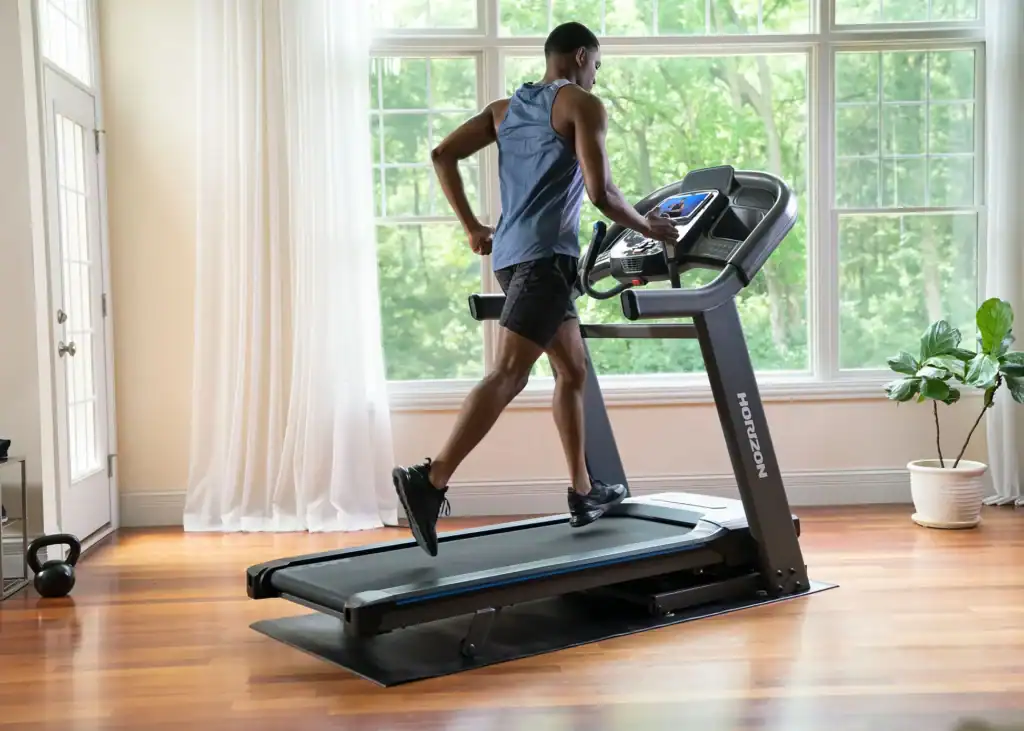
The headline feature here is the motor. The 3.5 CHP RapidSync drive shifts speed and incline about 33% faster than a standard treadmill motor — a spec that sounds abstract until you’re actually mid-interval. That faster response is the difference between the belt reacting the instant you hit a button and a half-second of lag that throws off your rhythm during a hard set.
The 22″ x 60″ deck is genuinely spacious — long and wide enough that stride length stops being a limiting factor for most runners, even at faster paces where foot placement naturally gets less precise. Combined with the motor, this is a machine built for people doing real interval work: sprint sets, hill repeats, race training, or consistent high-mileage weeks — not just steady-state walking or light jogging.
Related: Best Treadmills for Marathon Training
In practice, this is the kind of distinction I’d make with clients too: if you’re training for your first 5K and mostly walking or light jogging, a machine like this is overkill — you won’t notice the RapidSync motor’s faster transitions because you’re not changing pace often enough for it to matter. But if you’re doing structured interval sessions or building toward a race, that responsiveness stops being a nice-to-have and starts affecting whether your workout actually goes the way you planned it.
Where the 7.4 AT Falls Short
No treadmill at this price is without trade-offs, and a few are worth knowing before you buy:
- The 8.25″ LCD console is small for this price range. Most treadmills near $1,800 now ship with larger, tablet-style touchscreens. If you’re expecting that, the 7.4 AT’s display will feel like a step down.
- No decline option at any price point on this model. If simulating downhill running matters to your training, this treadmill doesn’t offer it. Worth noting: decline training is genuinely useful for runners specifically preparing for downhill race sections or working on eccentric loading, but it’s not something most home users end up using regularly even when they have it — so weigh this against how you’ll actually train, not just whether the feature exists.
- The machine itself weighs 318 lbs — separate from its 350-lb user weight capacity. Once it’s in place, moving it again is realistically a two-person job, so it’s worth thinking through placement before you buy rather than after.
No Subscription Required
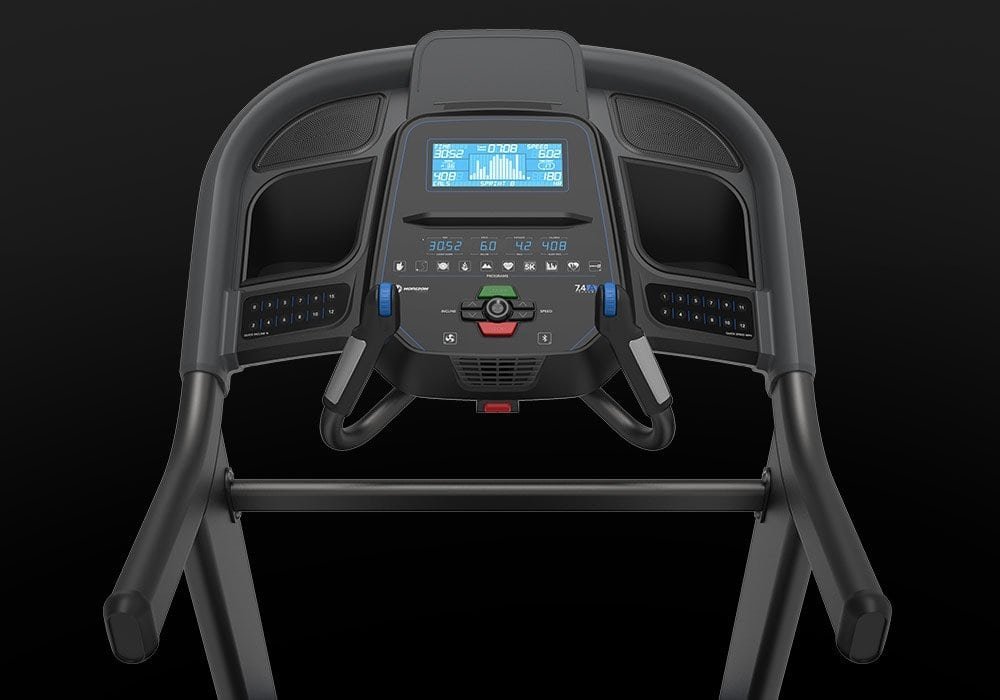
Same approach as the smaller Horizon 7.0 AT: full functionality, no subscription. Bluetooth connects to whatever training app you already use — Zwift, Strava, the Peloton app — and an integrated device rest plus rapid-charge USB port keep your phone or tablet powered and in view during a workout. Nothing on this machine is gated behind a monthly fee.
Build Quality and Warranty
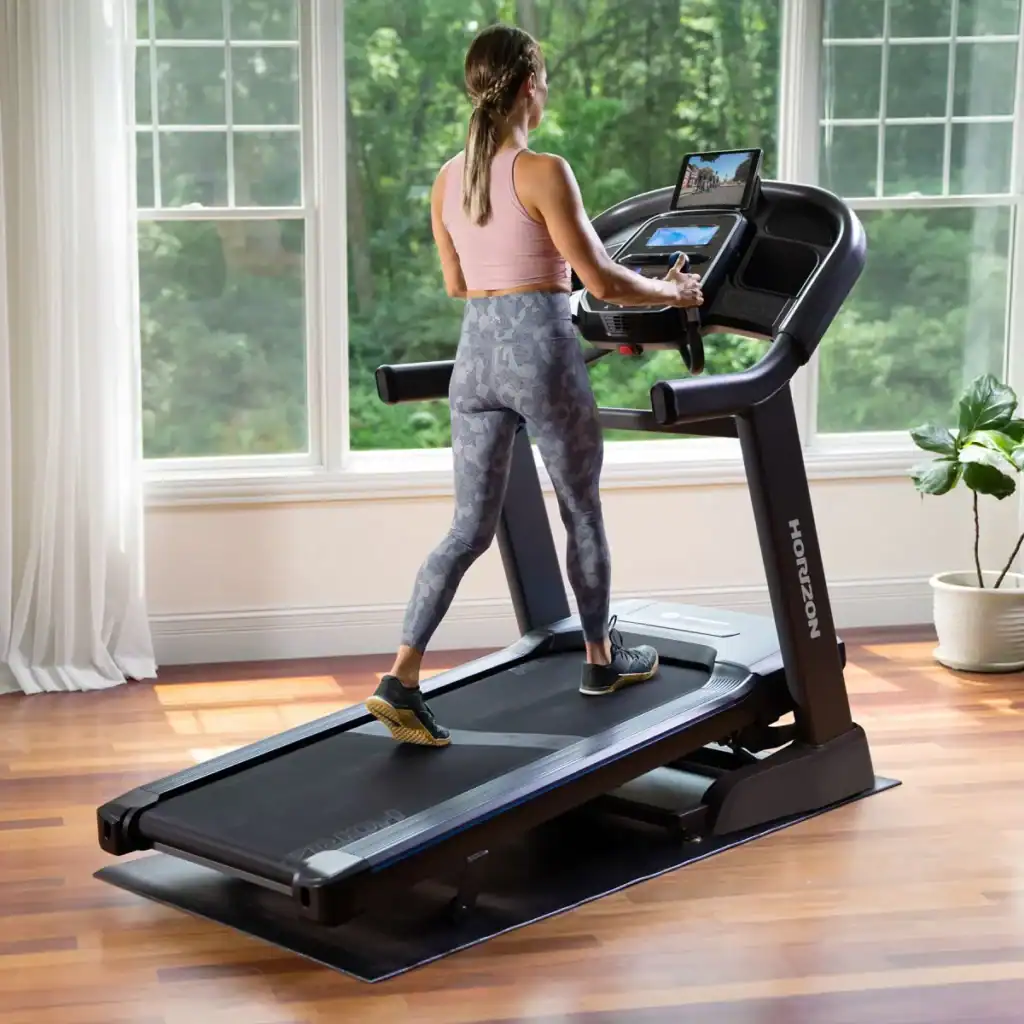
The 7.4 AT carries Horizon’s lifetime frame and motor warranty, plus 5 years on parts and 2 years on labor — a real step up from the 7.0 AT’s 3-year parts coverage, which tracks with this being a machine built for harder, more frequent use. Combined with the 350-lb weight capacity and reinforced frame, it’s designed for repeated training load rather than occasional jogging.
From what I typically see with home treadmills that get consistent high-mileage use, it’s rarely the frame that fails first — it’s the belt, motor electronics, and console components. That’s exactly why the parts and labor warranty numbers matter more than people expect when comparing two machines: a 5-year parts warranty versus 2 years is a meaningful gap if you’re actually putting real weekly mileage on this thing.
Horizon 7.4 AT vs. NordicTrack Commercial 1750
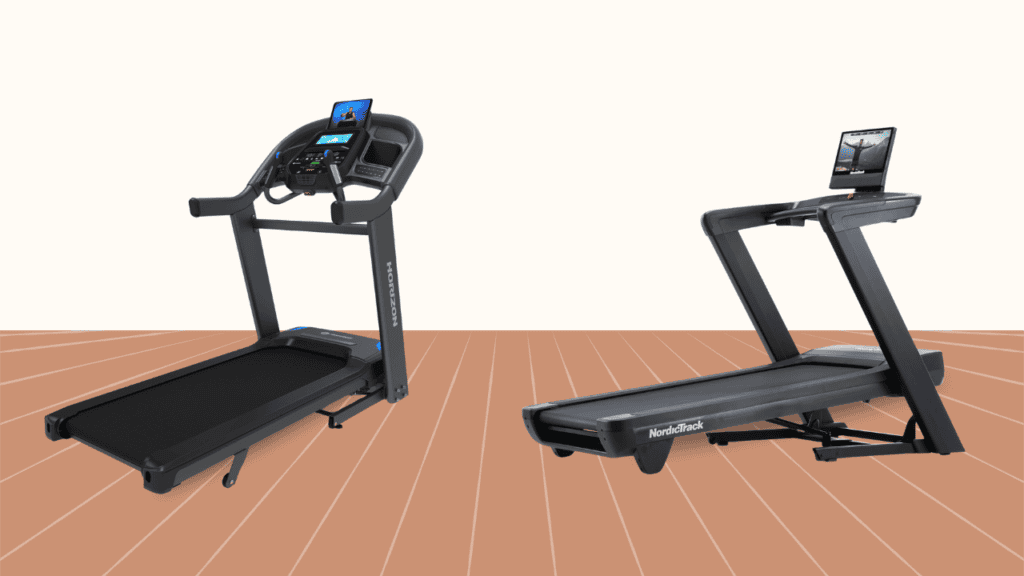
This is the real decision most buyers in this price range are weighing, so it’s worth a direct, honest comparison rather than picking a side.
| Horizon 7.4 AT | NordicTrack Commercial 1750 | |
|---|---|---|
| Motor | 3.5 CHP | 4.25 CHP |
| Deck Size | 22″ x 60″ | 22″ x 60″ |
| Incline / Decline | 0–15% / none | −3% to 12% |
| Weight Capacity | 350 lbs | 400 lbs |
| Console | 8.25″ LCD | 16″ pivoting touchscreen |
| Programming | 10 built-in, works with third-party apps | iFIT (subscription for full library) |
| Warranty | Frame: Lifetime · Motor: Lifetime · Parts/Electronics: 5 years · Labor: 2 years | Frame: 10 years · Motor: Lifetime · Parts/Electronics: 2 years · Labor: 1 year |
| Subscription Required for Full Use? | No | Yes (iFIT, ~$39/mo) |
| Check Price | Check Price → | Check Price → |
Where NordicTrack actually wins: a stronger motor (4.25 CHP vs. 3.5 CHP), a larger and more interactive touchscreen, a higher weight capacity, and a decline option Horizon doesn’t offer at all. These are real, meaningful advantages if guided workouts and raw hardware specs matter to you.
Where Horizon wins: no ongoing subscription cost, a $200 lower price, and stronger coverage on frame and parts warranties. NordicTrack has caught up to Horizon’s lifetime motor warranty in recent model years, so that specific advantage is no longer a Horizon-only differentiator — but Horizon still leads clearly on frame (lifetime vs. 10 years) and parts (5 years vs. 2).
The honest verdict on this comparison: it’s not a clean win either direction. If you’d actually use iFIT’s guided training consistently, the Commercial 1750’s stronger motor and screen may be worth the extra cost and subscription. If you already have a training app you like, or simply don’t want an ongoing fee attached to your treadmill, the Horizon 7.4 AT gives up some hardware headroom in exchange for zero long-term cost and better long-term warranty coverage.
Who Should Buy the Horizon 7.4 AT
- Runners doing serious interval work, race training, or high weekly mileage
- Anyone who already has a preferred training app and doesn’t want to pay for iFIT
- Buyers who prioritize long-term warranty coverage (frame and parts specifically) over screen size
- Anyone who wants a genuinely capable machine without an ongoing subscription cost
Who Should Consider the NordicTrack Commercial 1750 Instead
- Runners who want the strongest motor available in this price bracket
- Anyone who values guided, iFIT-led workouts and is comfortable with a monthly subscription
- Buyers who want a large touchscreen and don’t mind paying more upfront and monthly
Final Verdict
On its own, the Horizon 7.4 AT is a genuinely strong $1,800 treadmill — a motor and deck built for real interval training, solid warranty coverage, and no subscription standing between you and full functionality. Its real trade-offs are a smaller screen, no decline option, and a motor that’s a step behind NordicTrack’s, in exchange for $200 in savings and no ongoing cost.
For most runners doing serious training — race prep, structured intervals, consistent weekly mileage — I’d point you toward the 7.4 AT first. It gives you everything that actually affects your training quality without locking you into a monthly fee. Check today’s price on the Horizon 7.4 AT here, or if you’re comparing against a smaller budget, see how it stacks up against the Horizon 7.0 AT.
Frequently Asked Questions
Is the Horizon 7.4 AT worth it compared to the NordicTrack Commercial 1750?
It depends on your priorities. The 7.4 AT costs $200 less and has no subscription requirement, with stronger frame and parts warranties. The Commercial 1750 has a more powerful motor, a larger touchscreen, and a decline option, but requires an iFIT subscription for full functionality.
Does the Horizon 7.4 AT require a subscription?
No. It connects to third-party apps like Zwift, Strava, and the Peloton app over Bluetooth with no ongoing fee required to use the treadmill’s full functionality.
What’s the difference between the Horizon 7.0 AT and 7.4 AT?
The 7.4 AT has a stronger 3.5 CHP motor (vs. 3.0 HP), a larger 22″ x 60″ deck, a higher 350-lb weight capacity, and better parts/labor warranty coverage. It’s built for more serious, higher-mileage training than the 7.0 AT.
Does the Horizon 7.4 AT have a touchscreen?
No — it has an 8.25″ LCD display, which is smaller than the touchscreens found on some competitors, including the NordicTrack Commercial 1750’s 16″ pivoting touchscreen.
Does the Horizon 7.4 AT have a decline setting?
No. It offers incline up to 15%, but no decline option at any price point on this model.