The Concept2 RowErg costs about twice as much as air rowers that look almost identical to it. So is it actually better, or are you paying for the name?
I’ve been training clients for more than five years, and home cardio equipment comes up constantly. Behind every “which rower should I buy?” there are really two questions: Will this get me results? And will I still be using it in six months? This review answers both, including the downsides most reviews skip and a sensible budget alternative if the price is a dealbreaker.
Quick Verdict: Concept2 RowErg Review
The Concept2 RowErg is the best rowing machine for most people who plan to row consistently for years. It costs around $1,000, but you get data you can trust, a machine built to last over a decade, a transferable warranty, and resale value that makes the real cost lower than the price tag.
Buy it if: you’ll row regularly, want to track real progress, and would rather buy once than upgrade later.
Skip it if: you need a quiet machine, want instructor-led classes on a screen, or your budget is closer to $500. In that case, the MERACH R50 Pro (covered below) is the smarter starting point.
Specs at a Glance: Concept2 RowErg
| Resistance | Air (flywheel with 1–10 damper) |
| Monitor | Performance Monitor 5 (PM5) |
| Max User Weight | 500 lb (Concept2-tested) |
| Machine Weight | 57 lb (standard legs) |
| Seat Height | 14 in (standard) or 20 in (tall legs) |
| Fits Inseams Up To | 38 in |
| Space Needed While Rowing | About 9 x 4 ft |
| Storage | Splits into two pieces, stores upright |
| Power | 2 D-cell batteries, no cord |
| Connectivity | Bluetooth and ANT+, 50+ apps |
| Warranty | 5 years frame, 2 years all parts |
First, Why Rowing Is Worth It
Rowing is one of the most efficient forms of cardio you can put in a home gym. A proper stroke works your legs, hips, core, back, and arms, and it’s low-impact, so it’s easier on the knees and joints than running or jumping-based workouts.
The most common mistake I see is treating rowing as an arm exercise. It’s a leg-driven movement. The stroke follows a simple order: push with your legs, swing your body back, then pull with your arms. On the way back, you reverse it: arms, body, legs. Beginners who pull with their arms first tire out quickly and put extra strain on their lower back.
This matters when you choose a machine. A rower that feels smooth and consistent makes good technique much easier to learn and keep.
Why It’s Considered the Standard
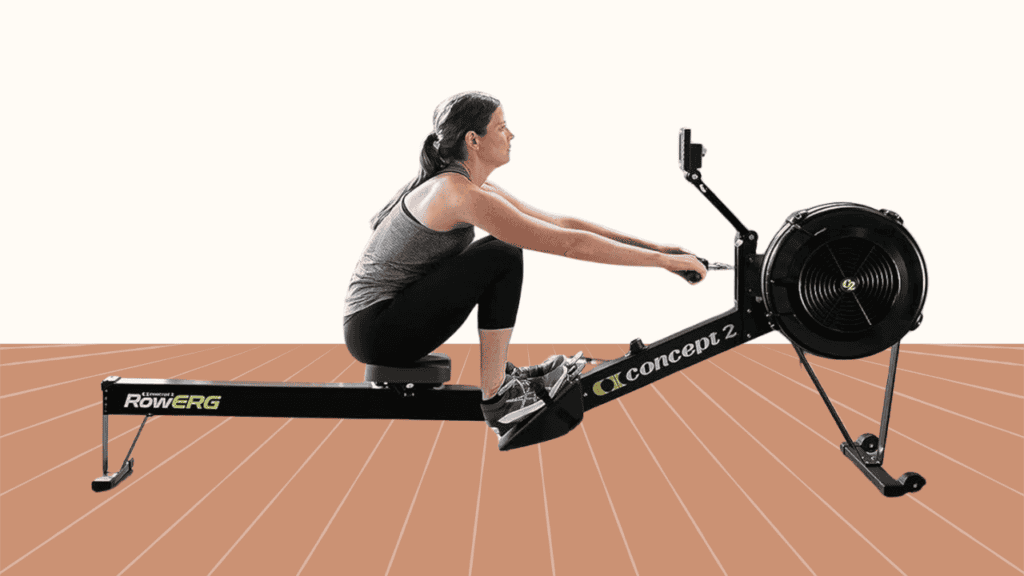
The RowErg is the machine Olympic-level rowers train on, and it’s what nearly every serious indoor rowing competition uses to measure performance. As a trainer, that matters to me for a reason that has nothing to do with racing: the machine was engineered to measure effort precisely and survive daily use. Those are the two things that decide whether home equipment gets used for years or ends up as expensive laundry storage.
Buyers agree. At the time of writing, it holds over 12,500 Amazon ratings averaging 4.9 out of 5 stars. Most products see their average slip as reviews pile up. This one hasn’t, which is rare at that scale.
How It Feels: Air Resistance and the Damper
The RowErg uses air resistance. A fan-style flywheel spins as you pull, so the harder and faster you row, the more resistance you generate. Your effort sets the intensity, not a fixed dial, which is why it feels noticeably closer to rowing on water than a magnetic machine does.
On the side of the flywheel is a damper lever numbered 1 to 10, and it’s the most misunderstood control on the machine. Most beginners assume 10 means “best workout” and crank it all the way up. It isn’t a difficulty setting. It controls how much air enters the flywheel, which changes how each stroke feels. Higher settings feel heavier and slower, like rowing a loaded boat. Lower settings feel lighter and quicker, like a racing shell. Your effort still decides how hard the workout is.
Most people train comfortably around 3 to 5, and that’s where I’d start any new client, regardless of fitness level. It’s not a beginner setting. It’s where most people’s stroke mechanics work best. Cranking it to 10 usually leads to early fatigue and poor form, not a better workout.
The Performance Monitor 5: Where the Price Difference Lives
This is the biggest functional gap between the RowErg and cheaper air rowers. It ships with the Performance Monitor 5 (PM5), the same monitor used in official competitions worldwide, and its numbers are standardized. A 2,000-meter time on your RowErg means exactly the same thing as a 2,000-meter time on anyone else’s.
That sounds like a small detail until you’re six months into training and want to know whether you’re actually improving. With the PM5, you can fairly compare today’s row to one from three years ago, or to rowers on the other side of the world. Most budget rowers give numbers that only mean something on that one machine. In my experience, progress people can measure is progress they stay motivated by.
The monitor shows pace, watts, or calories, includes preset and fully custom interval workouts, and connects via Bluetooth and ANT+ to heart rate monitors and dozens of training apps, including Concept2’s free ErgData app.
Build Quality, Warranty, and Long-Term Value
The frame uses aluminum front legs and steel rear legs; it’s rated for users up to 500 pounds, and it’s genuinely common to find Concept2 rowers still running well after a decade.
The warranty backs that up with specifics:
- Frame parts: 5 years against defects in materials or workmanship
- All other parts, including the monitor: 2 years, whether they’re defective or simply worn out (batteries excluded)
- Transferable: it passes to the next owner if you sell the machine
- One condition: oil the chain every 50 hours of use, which takes about a minute
This is the real answer to “why pay double?” Concept2 rowers hold their resale value unusually well. If you ever stop using yours, you can typically sell it for a meaningful share of what you paid. Most budget rowers don’t offer that once they’ve depreciated. So the real comparison isn’t “$1,000 vs. $500.” It’s closer to “a machine I’ll use for a decade and can resell vs. one I may end up replacing.”
The Honest Downsides of Concept2 RowErg
No machine gets a clean sweep. Here’s what to weigh before buying.
It’s loud. The rushing fan sound gets louder the harder you row, similar to a box fan on high. If you’re planning early-morning sessions next to a sleeping household or share thin apartment walls, take this seriously before you buy, not after.
No touchscreen, no instructor-led classes. You get the monitor and its workouts, plus whatever app you connect on your phone or tablet. If a studio-style class is what keeps you consistent, this isn’t that experience.
It weighs about 57 pounds. The wheels help, but moving it isn’t effortless.
It looks industrial. It’s built for function, not to match a modern living room.
It costs around $1,000. For most buyers, this is the real dividing line, not anything about how it performs.
Concept2 RowErg vs. MERACH R50 Pro
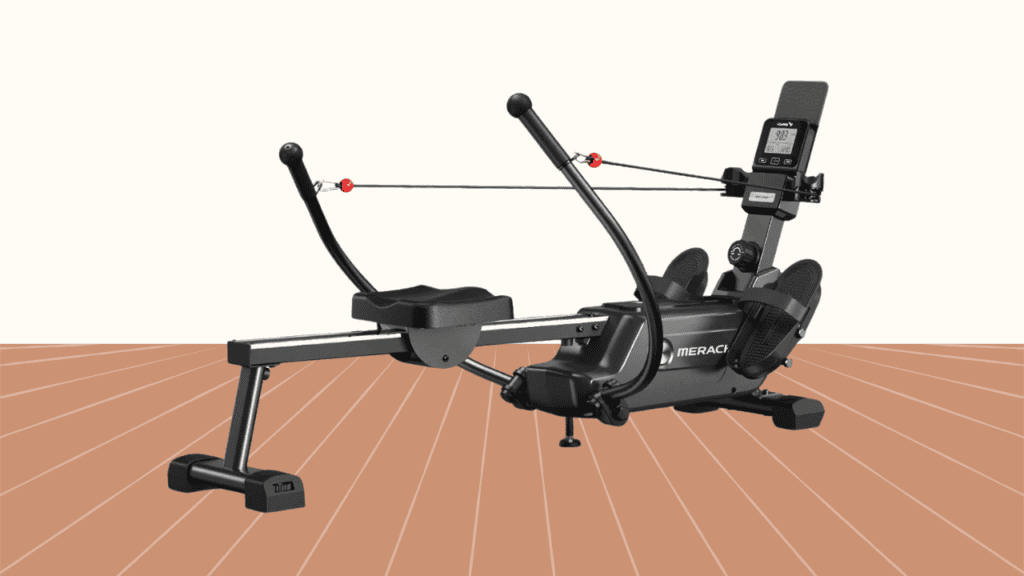
If $1,000 is more than you want to spend, the MERACH R50 Pro is the budget air rower I’d point you toward. It uses the same type of resistance, has a 10-level damper, and typically costs around half as much.
| Concept2 RowErg | MERACH R50 Pro | |
|---|---|---|
| Resistance | Air, 1–10 damper | Air, 10 levels |
| Max User Weight | 500 lb | 350 lb |
| Monitor Data | Competition-standard, comparable across machines | Only comparable on the same machine |
| App Support | 50+ apps via Bluetooth and ANT+ | Mainly MERACH’s own app |
| Resale Value | Strong | Limited |
| Check Price | Check Price → | Check Price → |
Choose the Concept2 if you’re committed to rowing, want accurate long-term tracking, or weigh over 350 pounds.
Choose the MERACH if you’re not sure rowing will stick, your budget is firmly under $600, or you’re training for general fitness rather than tracking your numbers closely. It’s a smart, lower-risk way to start without locking $1,000 into a habit you’re still testing.
Frequently Asked Questions
Is the Concept2 RowErg worth the price?
If you’ll row consistently for years, yes. The monitor accuracy, warranty, durability, and resale value together justify the premium. If you’re still testing whether rowing is for you, the MERACH R50 Pro is the lower-risk starting point.
Is it good for beginners?
Yes. Because resistance scales with your effort, it suits someone just starting out as well as an athlete. The most important thing for beginners is learning the legs-body-arms sequence early.
Is the Concept2 RowErg loud?
Yes, compared to magnetic rowers. The fan-like sound increases with effort and is similar to a box fan on high.
What damper setting should I use?
Start around 3 to 5. Higher settings make the stroke feel heavier but don’t mean a better workout, and they can make it harder to keep good form.
Is it good for tall users?
Yes. Both versions fit inseams up to 38 inches. The tall-legs version raises the seat to 20 inches, which helps if getting up from a low seat is difficult for you.
How much space do I need?
About 9 by 4 feet while rowing. For storage, it splits into two pieces and stands upright in a corner.
Does it need to be plugged in?
No. The monitor runs on two D-cell batteries, and the flywheel helps power it while you row, so the batteries last a long time.
How much maintenance does it need?
Very little. Oil the chain every 50 hours, wipe the rail, and replace the monitor batteries occasionally. Keeping the chain oiled is also required to keep the warranty valid.
Final Verdict
After more than five years of helping clients choose and use equipment, the question I care about isn’t which machine has the flashiest spec sheet. It’s which one will still be giving you accurate, trustworthy data five years from now. The Concept2 RowErg earns its premium right there. The consistent monitor, the transferable warranty, and the resale value are real, verifiable advantages, not just brand reputation.
If you’re committed to rowing as a long-term habit, the RowErg is worth it. If you’re not sure yet, start with the MERACH R50 Pro and upgrade later if it sticks.