A 15% incline. The same 5-year frame warranty as Vitalwalk’s $539 flagship. For under $350. On paper, that’s a striking value proposition, and after breaking down the specs, I think it holds up — as long as you go in knowing exactly what you’re giving up to get there, and ignoring one marketing number that doesn’t survive basic math.
Watch: Vitalwalk Apollo 11 Elite Review
At a Glance: Vitalwalk Apollo 11 Elite Specs
| Motor | 3.0 HP, brushless |
| Top Speed | 4 mph (0.6 mph minimum) |
| Auto Incline | 15%, 6 adjustable levels |
| Weight Capacity | 350 lbs |
| Unit Weight | 50 lbs |
| Unit Height | 7.9″ (slim profile) |
| Deck Size | 40″ x 16″ |
| Noise Level | ~35 dB (manufacturer-rated) |
| Warranty | 5 years (frame), 2 years (motor), lifetime tech assistance |
| Connectivity | Vitalwalk app, FitShow, Zwift; syncs to Apple Health & Strava |
Pros and Cons of Vitalwalk Apollo 11 Elite
Build Quality and Motor
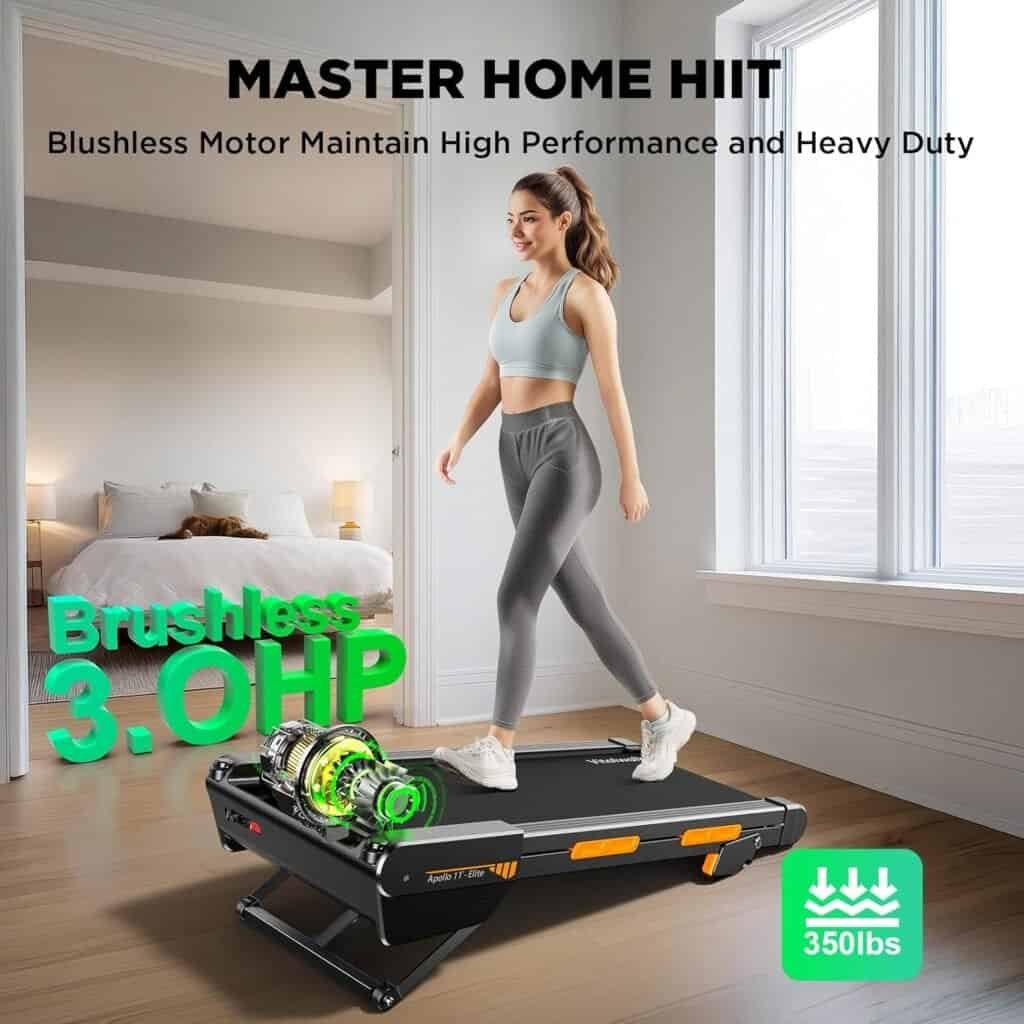
The Elite runs a 3.0 HP brushless motor — a step down from the Max’s 3.5 HP, which lines up with its smaller, more compact build. Vitalwalk states it’s rated to run continuously for up to 8 hours, in line with the rest of the lineup.
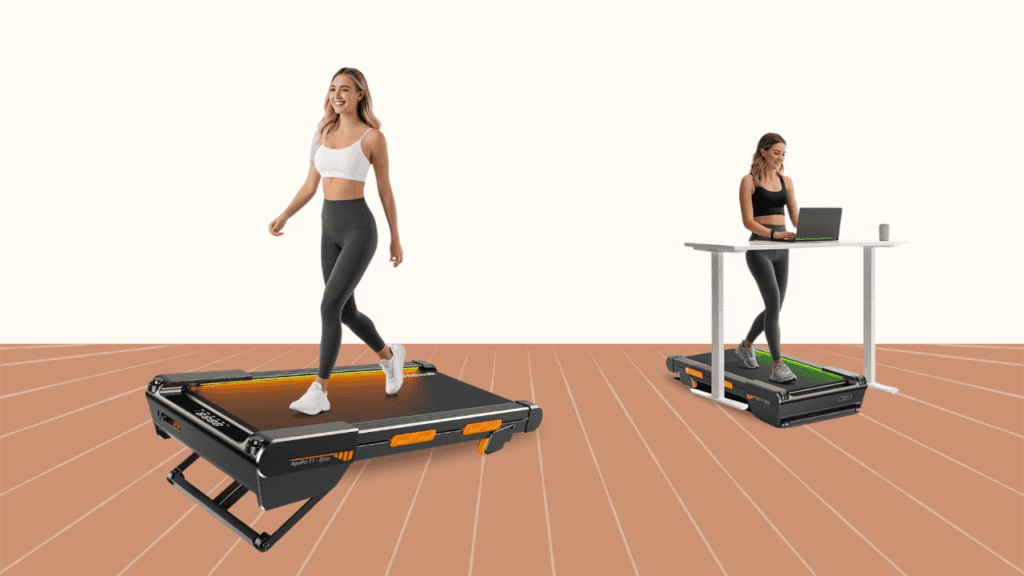
At a slim 7.9 inches tall, the Elite is built to slide under narrower desks and lower furniture than its siblings — making it one of the more compact walking pads under desk setups with limited clearance. It folds to store vertically in about 1.5 square feet — Vitalwalk states that saves roughly 80% of the floor space of a standard layout. Top speed is capped at 4 mph, with a low end of 0.6 mph, so this stays a walking-focused machine rather than something built for jogging.
The 15% Auto Incline
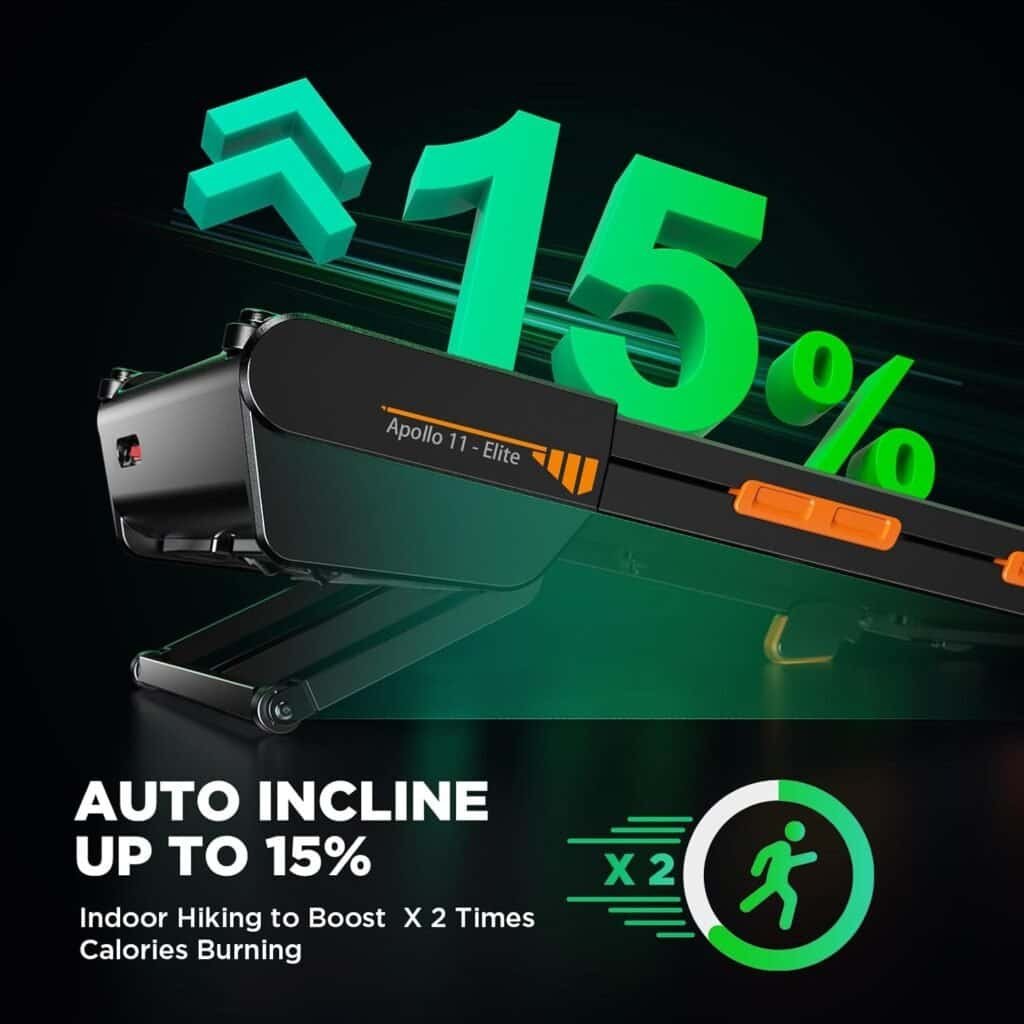
The Elite offers a 15% auto incline — meaningfully higher than the MERACH UltraWalk W60 Plus at 12%, and slightly ahead of the UREVO CyberPad Office at 14%. It sits below its own sibling, the Apollo 11 Max, which reaches 20%. There’s also a third model in the lineup, the Apollo 11 Ultra, but at a 12% incline and a price closer to the Max, the real choice for most buyers is between the Elite and the Max.
Like the Max, the Elite has no handrails, so the same incline-progression and safety guidance applies here — see our Apollo 11 Max review for the full breakdown on starting incline, progression pace, and who should get clearance before using steep settings.
A Trainer’s Take: The 6-Level Tradeoff
Here’s something a spec sheet won’t flag, but it matters for how you’ll actually use this pad: the Elite’s 15% incline is spread across only 6 levels, working out to jumps of about 2.5% each. The Max spreads its 20% across 20 levels — roughly 1% per step. If you’re building up incline gradually over time, which is the safer approach and the one I generally recommend to clients, the Elite’s bigger jumps between levels give you less fine control over that progression. It’s not a dealbreaker, but if you’re starting from a flat walking base, expect the early incline levels to feel like a bigger step up than they would on a pad with finer gradations.
The Calorie Claim, Corrected
One claim worth correcting: Vitalwalk markets this incline as capable of burning up to 450 calories in a 10-minute session. That works out to 45 calories per minute. Using the ACSM metabolic equation for walking energy expenditure, an 80 kg (176 lb) person walking at 2 mph on a 15% grade burns roughly 9 calories per minute; at 3 mph on the same grade, that rises to roughly 13 calories per minute. A realistic range at this incline is closer to 9 to 15 calories per minute, depending on body weight and speed — nowhere near 45. Treat that specific number as marketing, not a realistic expectation.
Deck Size and Stability
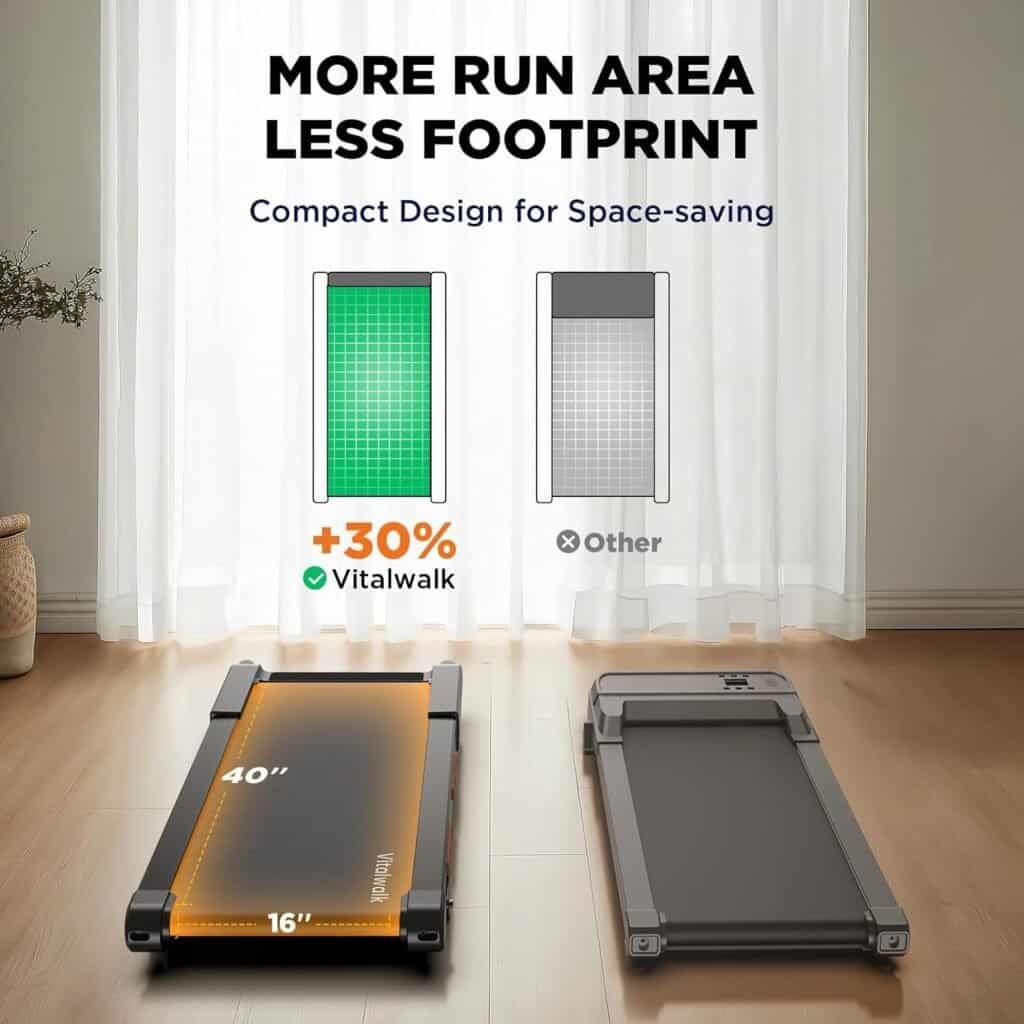
The belt measures 40 by 16 inches — Vitalwalk states that’s about 30% more usable belt space than a standard walking pad frame of similar size, thanks to the same hidden-motor, full-deck design used across the lineup.
The frame is rated for 350 lbs, comfortably above the 265 to 300 lbs many budget walking pads cap out at. Vitalwalk also claims industry-leading impact testing on the frame — that’s the manufacturer’s own testing claim, not an independently verified figure, but the 350-lb rating itself is real and above-average for the category.
It also uses the same 8-point shock-cushioning array with 4 exposed rubber dampening columns found on the Max, designed to reduce knee and ankle impact — a genuine quality-of-life feature that budget pads in this price range often skip.
Noise and Smart Features
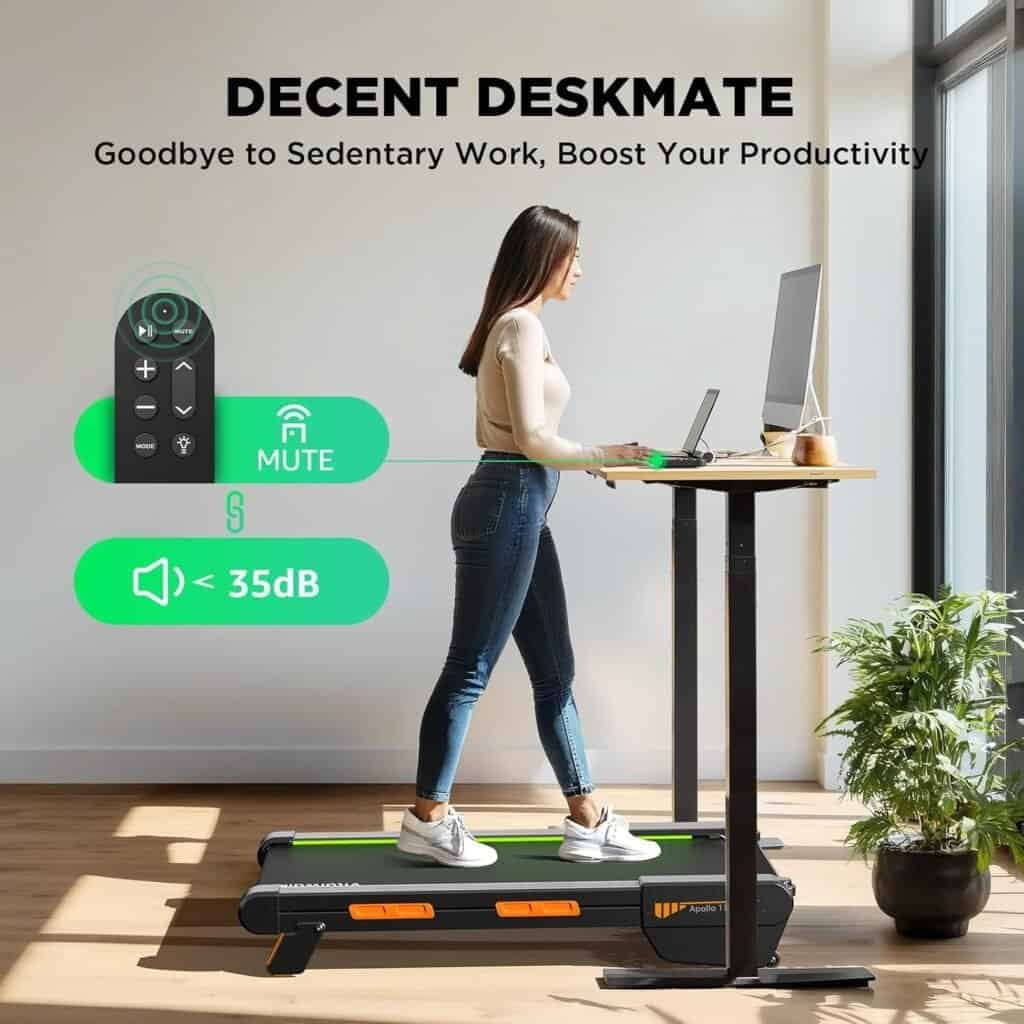
Vitalwalk rates this at around 35 decibels, close to library-quiet, with a mute button to silence workout beeps during calls. As always, treat manufacturer decibel ratings as best-case numbers — actual noise depends on your flooring.
It connects to the Vitalwalk app with FitShow and Zwift compatibility, syncing to Apple Health and Strava, plus the same speed-sensing ambient light and 15-second auto-pause safety feature found across the lineup. This model currently sits around 4.3 out of 5 on Amazon across roughly a hundred reviews — a reasonable public data point.
Warranty
Despite being the entry model in the lineup, the Elite carries the same warranty as the pricier Max: 5 years on the frame, 2 years on the motor, plus lifetime technical assistance via Amazon’s seller contact system. For comparison, the MERACH UltraWalk W60 Plus offers 2 years with registration, and the UREVO CyberPad Office offers 1.5 years with registration. A 5-year frame warranty at this price is genuinely rare, and it’s the single strongest argument for the Elite’s value.
Where It Falls Short
Compared to its own sibling, the Max, you’re giving up 5 percentage points of incline, half a horsepower of motor, a full mile per hour of top speed, 50 lbs of weight capacity, and a smaller belt. The 4 mph top speed rules out anything beyond a brisk walk. On the reliability side, available owner feedback on this model hasn’t shown any recurring defects so far, though with around a hundred reviews, that’s still a fairly small sample to be fully confident in.
Price and Value
Vitalwalk lists this at $379, though it’s commonly seen priced between $299 and $342. It shares the Max’s cushioning system, smart features, and full warranty, just in a smaller, lower-capacity package. That combination is what makes the value case: near-flagship durability and support for well under the flagship price.
Who Should Buy the Vitalwalk Apollo 11 Elite?
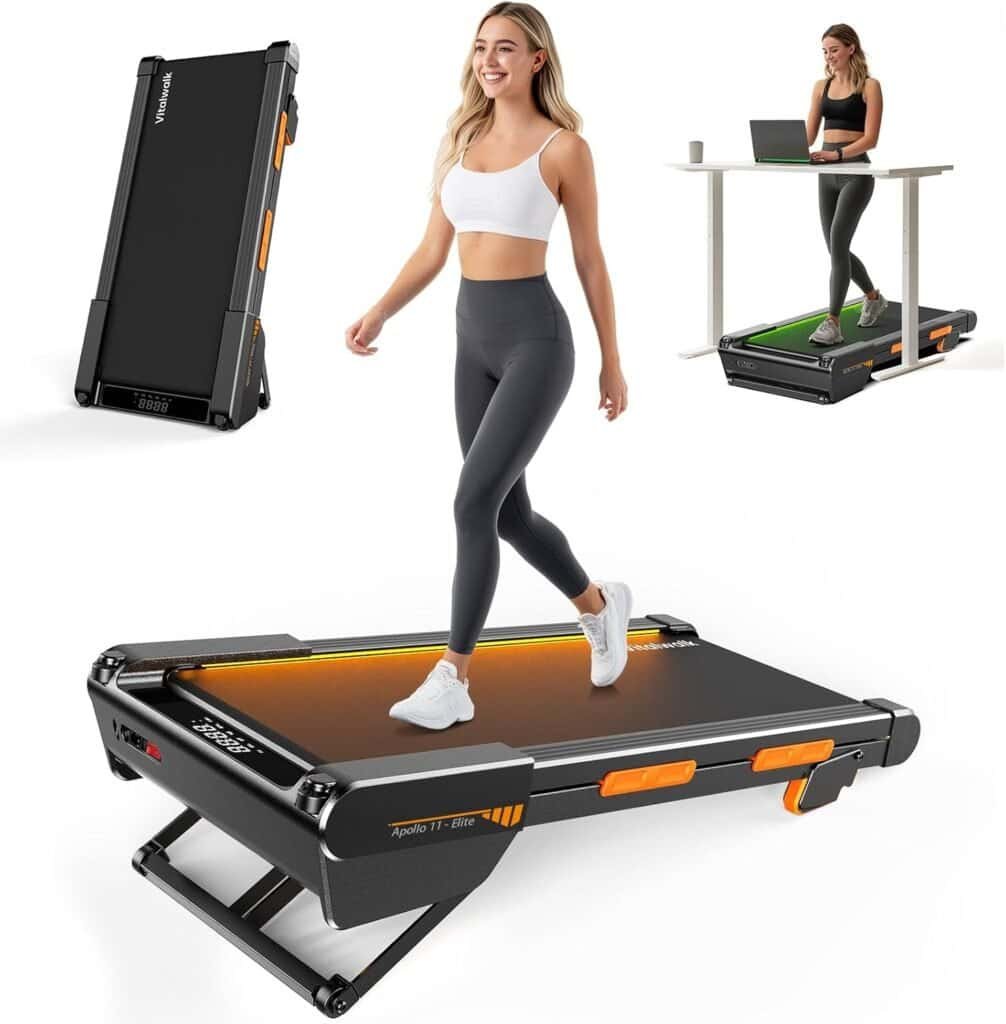
This is a strong fit if you want incline training in a smaller footprint, have a narrower desk setup, or want most of what the Max offers without paying for the larger deck and higher weight capacity. It’s a weaker fit if you’re near the 350-lb capacity threshold, want the widest possible stride, or specifically want the highest incline Vitalwalk offers — in which case the Max is the better pick.
Frequently Asked Questions
Is the Vitalwalk Apollo 11 Elite worth it?
For most buyers who want incline training in a compact footprint, yes — it carries the same 5-year frame warranty and cushioning system as Vitalwalk’s $539 Max model for well under $350, which is a genuinely strong value proposition in this category.
What’s the difference between the Vitalwalk Apollo 11 Elite and Max?
The Max offers a higher 20% incline across 20 levels (versus the Elite’s 15% across 6), a larger 43″x18″ deck, a higher 400-lb weight capacity, and a 3.5 HP motor versus the Elite’s 3.0 HP. Both share the same cushioning system, smart features, and warranty terms.
Does the Vitalwalk Apollo 11 Elite really burn 450 calories in 10 minutes?
That’s Vitalwalk’s own marketing claim, and it doesn’t hold up to scrutiny. 450 calories in 10 minutes works out to 45 calories per minute — using the standard ACSM walking metabolic equation, a realistic range at this incline is roughly 9 to 15 calories per minute, depending on body weight and speed. Treat Vitalwalk’s specific number as marketing rather than a realistic expectation.
How much weight can the Vitalwalk Apollo 11 Elite hold?
It’s rated for 350 lbs, which is above the 265 to 300 lb range common among many budget walking pads, though lower than the Max’s 400-lb rating.
What warranty does the Vitalwalk Apollo 11 Elite come with?
A 5-year warranty on the frame and 2 years on the motor, plus lifetime technical assistance — identical to Vitalwalk’s pricier Max model, and well beyond what most competing walking pads offer.
Final Verdict
The Vitalwalk Apollo 11 Elite makes a genuinely strong value case: a real 15% incline, a 5-year frame warranty that matches a flagship costing $200 more, and cushioning and smart features carried over unchanged from the pricier model — all for under $350. The trade-offs are real (a smaller deck, lower capacity, coarser incline steps, and a top speed that stays walking-only), and that calorie claim should be ignored entirely. But if incline training in a compact footprint is the goal, this is one of the more complete packages available at this price point.